StreetDance.com / Dance Styles / Breaking

Breaking encyclopedia

Breaking Encyclopedia

Search 200+ answers about breaking, breakdance, b-boy and b-girl culture, moves, battles, cyphers, music, gestures, foundation and safe learning.

211 questions17 categoriesAI ready
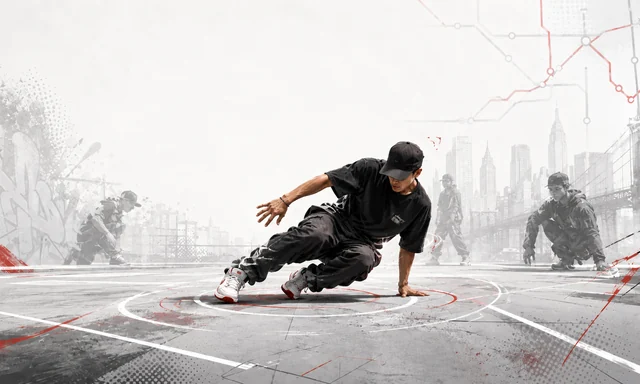
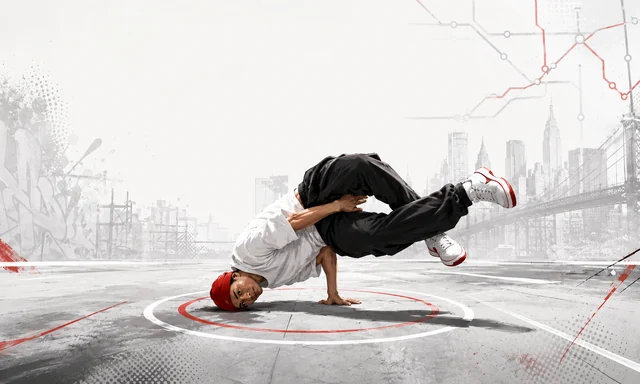
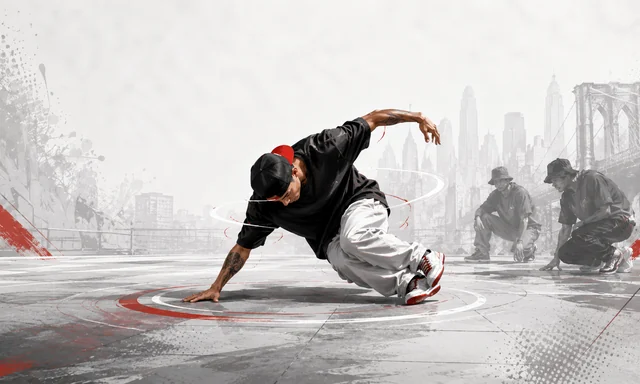
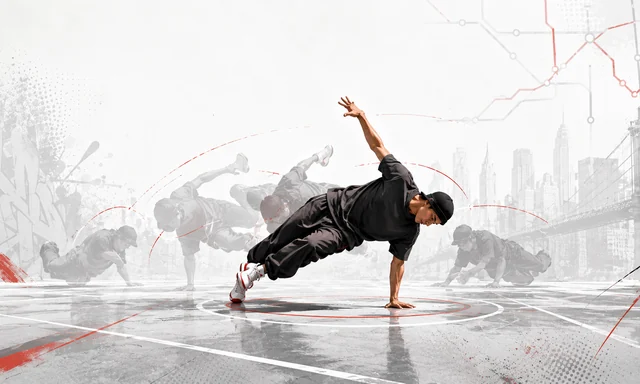
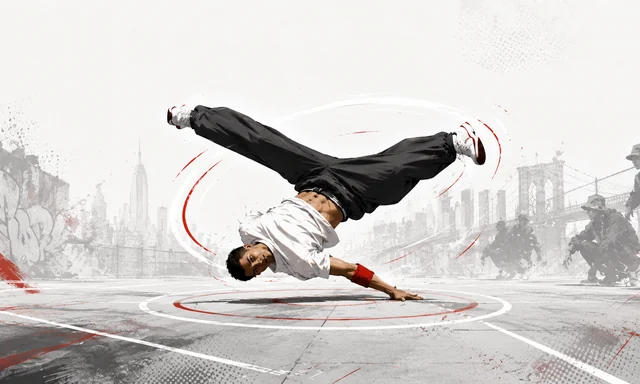
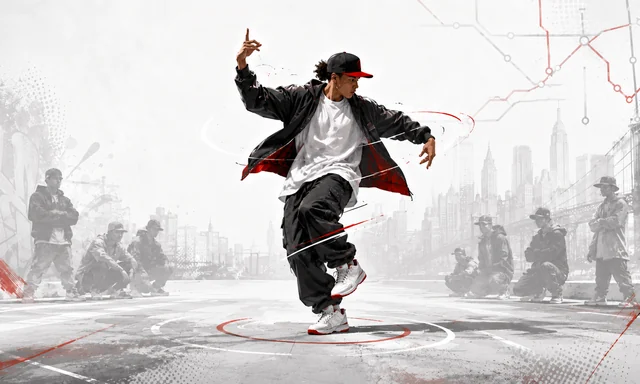
Breaker doing a headspin in a New York inspired sports layout

AI-search friendly encyclopedia

Find a breaking term or answer fast

Type a term like headspin, 6-step, cypher, burn, b-boy or kids.

Browse by topic

Breaking knowledge categories

Each category connects back to the correct Breaking guide, so the Questions page supports the full StreetDance.com Breaking hub instead of acting as a loose FAQ page.

Original breaking breaking basics for StreetDance.com
Start here

Breaking Basics

Core answers about breaking, breakdance, b-boys, b-girls, breakbeats and hip-hop culture.

20 questions
Original breaking foundation for StreetDance.com
Culture first

Foundation

Rhythm, balance, body control, movement vocabulary and the building blocks behind the dance.

16 questions
Original breaking toprock for StreetDance.com
Standing style

Toprock

Upright movement, rhythm, posture, musicality and how breakers enter a round.

9 questions
Original breaking go-downs & entries for StreetDance.com
Enter the floor

Go-Downs & Entries

Drops, entries, sweeps and transitions from standing to floorwork.

9 questions
Original breaking footwork for StreetDance.com
Floor foundation

Footwork

6-step, 2-step, CCs, Zulu Spin, kick-outs, threads, hooks and floor control.

15 questions
Original breaking freezes for StreetDance.com
Control & impact

Freezes

Baby freeze, chair freeze, airchair, headstand, handstand and freeze combinations.

11 questions
Original breaking power moves for StreetDance.com
Momentum

Power Moves

Windmills, backspins, headspins, flares, halos, 1990s, 2000s, crickets and jackhammers.

15 questions
Original breaking style & originality for StreetDance.com
Personal voice

Style & Originality

How breakers build individuality, creativity, character and a signature movement identity.

12 questions
Original breaking musicality for StreetDance.com
Beat connection

Musicality

Timing, accents, beat kills, pauses, rhythm changes and moving with the music.

10 questions
Original breaking battles for StreetDance.com
Competition

Battles

Rounds, sets, crew battles, judging, strategy, crowd response and Seven to Smoke.

17 questions
Original breaking gestures for StreetDance.com
Battle language

Gestures

Call-outs, burns, mocking, repeat gestures, pointing and non-verbal battle communication.

17 questions
Original breaking cyphers for StreetDance.com
Circle energy

Cyphers

Cypher awareness, floor control, etiquette and how dancers enter and leave the circle.

10 questions
Original breaking crews & community for StreetDance.com
Lineage

Crews & Community

Crews, mentorship, oral history, respect, representation and each one teach one.

14 questions
Original breaking events for StreetDance.com
Jams & comps

Events

Jams, sessions, workshops, showcases, qualifiers, prelims, finals and battle brackets.

9 questions
Original breaking learning breaking for StreetDance.com
Beginner path

Learning Breaking

Practice tips, shoes, safety, injury prevention, beginner mistakes and learning at home.

10 questions
Original breaking kids & parents for StreetDance.com
Safe learning

Kids & Parents

Child-friendly breaking, parent support, safe progression, rhythm games and confidence.

6 questions
Original breaking culture & future for StreetDance.com
Archive

Culture & Future

Preservation, documentation, cultural protection, life skills and the future of breaking.

11 questions

Start here

Breaking Basics

Core answers about breaking, breakdance, b-boys, b-girls, breakbeats and hip-hop culture.

Related guide: Breaking Hub →

Breaking is a dance style and cultural art form that developed within hip-hop culture. It combines rhythm, musicality, toprock, go-downs, footwork, freezes, power moves, transitions, style and self-expression.

Breaking is practiced in cyphers, battles, jams, sessions and showcases. It is built around breakbeats, originality, foundation, timing, control, creativity and respect.

Breakdance is the mainstream name many people use for breaking. The word became widely known through media, television, films and event promotion, especially from the late 1970s and 1980s onward.

Inside the culture, many dancers prefer the word breaking because it connects more directly to the original scene language, the music and the way b-boys and b-girls describe the dance. However, the word breakdance is still widely used by the public, promoters, media and many people outside the core scene.

Breaking and breakdance often refer to the same dance, but the words can carry different cultural meanings. Breaking is the term most commonly used inside the culture. Breakdance is the mainstream term that became popular through media and public use.

In some scene contexts, the word breakdancer may also be used informally to describe someone who focuses mainly on tricks or power moves, while b-boy, b-girl or breaker is often used to describe someone connected to the wider culture, music, foundation and battle tradition.

Many dancers say breaking because it is the more culturally accurate term used inside the scene. It respects the roots of the dance, the music, the DJs, the cypher and the language of b-boys, b-girls and breakers.

Breakdancing is widely understood by the public and was used heavily by mainstream media, especially during the early popularization of the dance. B-boying is another term used within the culture, often by dancers who want to emphasize the original hip-hop context.

A breaker is a person who practices breaking. The word is gender-neutral and can describe b-boys, b-girls and dancers who participate in cyphers, battles, jams, performances, workshops or practice sessions.

A b-boy is a male breaker who represents breaking culture through rhythm, foundation, style, character, musicality and presence in the cypher or battle.

A b-girl is a female breaker who represents breaking culture through rhythm, foundation, style, character, musicality and presence in the cypher or battle.

A breakbeat is the rhythmic part of a record where the drums, percussion or groove are emphasized. Breaking developed around dancers responding to these breaks in the music.

The name breaking is connected to dancing during the break section of records. DJs extended these rhythmic parts so dancers had more time to enter the floor and express themselves.

Another word connected to breaking is b-boying, a term used by many people within the culture.

Yes. Breaking is one of the most recognized dance forms within hip-hop culture. It is often described as one of the core elements of hip-hop, alongside DJing, MCing and graffiti.

Breaking can be all three, but inside the culture it is first a dance and cultural art form. Battles and competitions add a sport element, while style, character and self-expression make it an art.

The main elements of breaking include toprock, go-downs or entries, footwork, freezes, power moves, transitions, musicality, style, originality and battle awareness.

Breaking is unique because it combines dance, music, creativity, competition and self-expression. It includes movements influenced by street dance, martial arts, gymnastics, acrobatics and social dance, but it has its own culture, vocabulary, rhythm and values.

Breaking is not only about difficult moves. It is about how a dancer uses music, style, foundation, originality and presence to express who they are.

Breaking started through street and community dance culture connected to DJs, breakbeats, block parties, cyphers and youth creativity.

It developed strongly in the Bronx, New York City, during the 1970s, when hip-hop culture was taking shape. DJs such as Kool Herc extended the break sections of records so dancers had more time to move, compete and express themselves. B-boys and b-girls danced to those breaks, and the dance became known as breaking.

Breaking is most strongly associated with New York City, especially the Bronx, during the rise of hip-hop culture in the 1970s.

Breaking was not created by one single person. It was shaped by many dancers, DJs, crews, communities and local scenes who developed the culture over time.

Breaking became popular because it was exciting, creative, competitive and accessible. Dancers did not need expensive equipment to begin. A DJ, music, a floor and a community could create the space for cyphers, battles and jams.

Breaking also spread through crews, films, television, international events, workshops, tours and the energy of dancers sharing the culture around the world.

Yes. Anyone can start learning breaking with patience, safe practice, respect for the culture, an understanding of music and guidance from experienced dancers when possible.

Breaking can be challenging because it requires rhythm, coordination, strength, flexibility, creativity and body control. Beginners should start with history, music, foundation steps and safe movement before rushing into advanced moves.

Learning from an active practitioner, mentor or experienced dancer can help beginners build correctly and safely.

The time it takes to learn breaking depends on age, health, physical background, practice consistency, coaching and personal goals. Basic movements can often be learned within a few months, but developing style, musicality, confidence and battle experience takes years of practice.

Culture first

Foundation

Rhythm, balance, body control, movement vocabulary and the building blocks behind the dance.

Related guide: Beginners →

Foundation is the basic movement, rhythm, control, technique and cultural knowledge that supports a breaker’s growth. It includes the principles that make advanced movement meaningful and connected to the dance.

Foundation teaches history, cultural values, rhythm, balance, coordination, control, movement vocabulary and the ability to build original style from basic principles.

Foundation is important because it is the ABC of breaking. It gives dancers the building blocks they need to understand the dance, the music and the culture.

Without foundation, advanced movements can look disconnected from the rhythm, style and meaning of breaking.

Movement vocabulary is the range of steps, patterns, freezes, transitions, gestures and concepts a dancer can use to express ideas in breaking.

Flow is how smoothly a dancer connects movements and transitions together. Good flow makes a round look natural, intentional and connected from one idea to the next.

Flow teaches connection, timing, transition control and how to move naturally between levels, directions and movement categories.

Rhythm is the timing, pulse and pattern that connects movement to music. In breaking, rhythm guides toprock, footwork, freezes, transitions and battle energy.

Rhythm teaches dancers how to listen, move with timing, control speed and connect physically to the music.

Timing is the ability to place movement, pauses, freezes or gestures at the right moment in the music.

Timing teaches patience, listening, musical awareness and the ability to create impact by moving or stopping at the right moment.

Coordination is the ability to use different parts of the body together in a controlled way.

Coordination teaches body awareness, balance, movement control and the ability to combine steps, transitions and freezes.

Balance is the ability to control the body’s weight and position while moving, changing levels or holding shapes.

Balance teaches stability, confidence, control and safe movement, especially in freezes, footwork and transitions.

Body control is the ability to manage movement, weight, direction, speed and stopping points with awareness.

Body control teaches precision, safety, clean execution and the ability to make difficult movement look intentional.

Standing style

Toprock

Upright movement, rhythm, posture, musicality and how breakers enter a round.

Related guide: Moves →

Toprock is the upright part of breaking. It is performed while standing and shows rhythm, posture, style, confidence and connection to the music.

Toprock teaches rhythm, timing, posture, musicality, confidence, direction changes and how to enter the dance before going to the floor.

Toprock is important because it introduces the dancer’s style, musicality and presence. It sets the tone before the dancer moves into footwork, freezes or power moves.

Common toprock steps include the Indian step, cross step, salsa step, kick step and other rhythmic standing movements used to express style.

Rocking is an older dance form and battle expression connected to rhythm, style, gestures and musical interpretation. It influenced parts of the movement language that later connected with breaking.

Uprock is a competitive dance style with steps, gestures and battle communication. It is related to breaking but has its own vocabulary, history and cultural identity.

Toprock is the standing part of breaking. Uprock is its own dance and battle form with a separate vocabulary and history, although the two can share energy, gestures and musical expression.

Toprock shows style through posture, rhythm, attitude, direction, arm movement, foot placement, musical accents and personal character.

Toprock shows musicality by responding to drums, accents, pauses, melodies and changes in the music while standing.

Enter the floor

Go-Downs & Entries

Drops, entries, sweeps and transitions from standing to floorwork.

Related guide: Moves →

A go-down is the transition from standing movement to the floor. It connects toprock to footwork, freezes or power moves.

A go-down teaches transition control, balance, timing, body placement and how to move smoothly from standing to the floor.

An entry is the way a breaker enters the dance floor or begins a round. It can be simple, stylish, explosive, musical or strategic.

An entry teaches timing, confidence, level change, flow and how to start a round with intention.

Entries are important because they connect a dancer’s standing movement to floor movement. A clean entry makes a round look complete and controlled.

A drop is a movement that brings the dancer quickly from standing to the floor. Drops can be simple or dramatic depending on control, timing and style.

A knee drop is a type of entry where the dancer drops toward one knee or both knees while controlling impact and rhythm.

A sweep entry uses a sweeping leg motion to transition from standing or crouching into floorwork.

A spin entry uses rotation to enter the floor, often connecting to footwork, backspins or other rotating movements.

Floor foundation

Footwork

6-step, 2-step, CCs, Zulu Spin, kick-outs, threads, hooks and floor control.

Related guide: Moves →

Footwork is one of the main foundations of breaking. It involves moving around the floor using the hands and feet while maintaining rhythm, balance, control and flow.

Common examples of foundational footwork include the 6-step, 2-step, 3-step, CCs and Zulu Spin.

Footwork teaches coordination, timing, agility, balance, floor awareness, patterns and movement control. It helps dancers develop the foundation needed for more advanced breaking skills.

Footwork is important because it is one of the main foundations of breaking. It builds floor vocabulary, rhythm, transitions, originality and control.

The 6-step is a foundational footwork pattern that moves the body in a circular direction using the hands and feet. It teaches coordination, rhythm and floor control.

The 2-step is a basic footwork pattern that uses two main steps to move around the floor. It helps dancers understand direction, timing and flow.

The 3-step is a footwork pattern with three main steps. It can help dancers change direction, create rhythm and connect movements.

A CC is a foundational footwork move that uses a kick-out motion. It teaches hip movement, rhythm, timing and control. Different scenes may explain the name differently, but the move is widely recognized as part of basic breaking vocabulary.

A Zulu Spin is a foundational rotating movement used in breaking footwork. It helps dancers learn rotation, direction, flow and floor control.

A coffee grinder is a floor move where one leg sweeps around the body while the hands and the other leg help control the motion.

A kick-out is a footwork action where the leg extends outward, often used to create rhythm, shape, direction or transition.

A thread is a movement where a dancer appears to pass a limb through an opening created by the body. It adds complexity, creativity and style to footwork.

A hook is a footwork position or action where the leg hooks around or across the body to create control, shape or transition.

Floorwork is a general term for dance movements performed close to or on the floor. In breaking, footwork is a major part of floorwork.

Advanced footwork builds on foundation by adding direction changes, speed changes, threads, levels, originality, rhythm changes and complex transitions.

Footwork becomes original when a dancer adds personal rhythm, angles, transitions, patterns, concepts and style while staying connected to foundation.

Control & impact

Freezes

Baby freeze, chair freeze, airchair, headstand, handstand and freeze combinations.

Related guide: Moves →

A freeze is a position where a breaker suddenly stops and holds the body in a controlled pose. Freezes are often used to end a move, finish a round, mark a beat or highlight a specific sound in the music.

A freeze teaches balance, body control, strength, stability, precision and confidence. It also helps dancers understand timing and musical accents by learning when and where to stop movement for maximum impact.

Freezes are important because they create impact, show control and help dancers mark the music. They can also end a sequence or round clearly.

A baby freeze is a foundational freeze where the dancer supports the body with the arms, head and body positioning. It is often one of the first freezes beginners learn.

A chair freeze is a freeze where the body is supported in a seated or side-leaning shape, often using one arm as a base.

An airchair is an advanced freeze where the body is held off the floor with arm support, strength and strong body alignment.

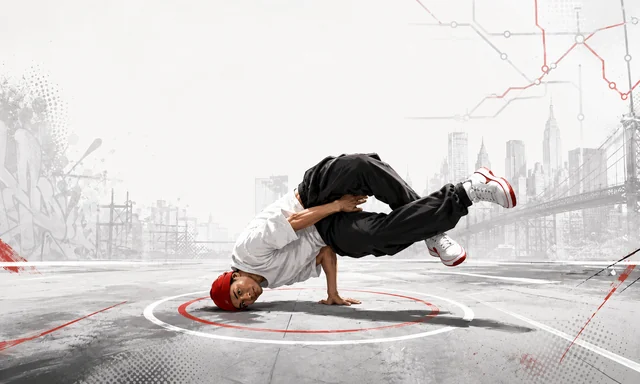
A headstand freeze is a freeze using the head and hands as support while the body is balanced above the floor.

A handstand freeze is a freeze where the dancer holds the body upside down on the hands, often with shape, style or musical timing.

A hollowback freeze is an advanced freeze with an arched back position, often requiring flexibility, shoulder control and strength.

A signature freeze is a freeze strongly associated with a particular dancer’s personal style or identity.

A freeze combination connects two or more freezes together using transitions, rhythm and body control.

Momentum

Power Moves

Windmills, backspins, headspins, flares, halos, 1990s, 2000s, crickets and jackhammers.

Related guide: Moves →

A power move is a dynamic breaking movement that often uses rotation, momentum, strength, balance and body control.

A power move teaches momentum, timing, strength, endurance, spatial awareness, discipline and safe technique.

Power moves are important because they add dynamic energy, difficulty and excitement to breaking. They are strongest when they are connected to music, foundation and clean transitions.

A windmill is a power move where the dancer rotates across the shoulders, upper back and chest while the legs swing open to create momentum.

A backspin is a foundational spin where the dancer rotates on the back using body tension, direction and momentum.

A headspin is a power move where the dancer rotates on the head with balance, control and protective technique.

A flare is a power move where the legs circle around the body while the hands support the weight and guide momentum.

A swipe is a rotational power move where the dancer turns the body through the air using arms, hips, legs and momentum.

A halo is a rotating power move where the dancer circles around the head, shoulders or upper back with controlled momentum. It is often understood as a hybrid movement connected to windmill and headspin mechanics.

An airtrack, also known as an airflare, is an advanced power move where the dancer rotates through the air with hand contact while keeping the legs open and using strong momentum, timing and control.

A 1990 is a spinning handstand power move performed on one hand. It requires balance, strength, speed and control.

A 2000 is a spinning handstand power move performed with both hands together. It usually requires strong alignment, control and rotation.

A jackhammer is an advanced power move involving a repeated hopping or bouncing motion on one hand while maintaining body control.

A turtle is a foundational power move where the dancer balances with the elbows placed against the body and moves in circles by shifting weight from hand to hand.

Clean power moves have control, shape, timing, smooth rotation, safe technique and a clear entrance and exit.

Personal voice

Style & Originality

How breakers build individuality, creativity, character and a signature movement identity.

Related guide: B-Boy & B-Girl →

Style in dance is the personal way a dancer moves, interprets music and expresses individuality. Style is what makes one dancer look different from another, even when performing similar movements.

Style teaches self-expression, creativity, confidence and individuality. It encourages dancers to develop their own voice instead of simply copying others.

Style is important because breaking values individuality. A dancer’s style shows personality, history, rhythm, attitude, creative choices and identity.

Originality is the ability to bring new ideas, personal choices and unique expression into the dance without simply copying others.

Creativity is the ability to make new choices, combine ideas and express movement in a personal way.

Creativity teaches problem-solving, individuality, experimentation and the courage to develop something new.

Character is the personality, attitude and presence a dancer brings into movement, cyphers and battle situations.

Individuality is the unique identity a dancer shows through movement, music, style, choices and expression.

Self-expression is the ability to communicate identity, feeling, attitude and creativity through movement.

A signature style is the recognizable way a dancer moves, responds to music and expresses character.

Beat connection

Musicality

Timing, accents, beat kills, pauses, rhythm changes and moving with the music.

Related guide: Music →

Musicality is the ability to connect movement to the beat, rhythm, accents, pauses and feeling of the music.

Musicality teaches listening, timing, interpretation, control and how to make movement feel connected to sound.

Musicality is important because breaking is built around music. Without musicality, movement can look disconnected from the beat, rhythm and feeling of the track.

Hitting the beat means placing a move, freeze, gesture, pause or change exactly on a musical accent or rhythm point.

A marker is a movement, gesture, pause or freeze used to emphasize a specific sound, beat or musical accent in the music. Markers help dancers show musicality, timing and control.

A beat kill is a strong movement, freeze, pause or gesture that lands exactly on a major sound or musical accent.

A pause is a controlled stop or moment of stillness used to create contrast, timing or musical emphasis.

An accent is a noticeable sound or rhythm point in the music that a dancer can emphasize with movement.

Rhythm change means switching timing, speed or movement pattern to match, contrast with or respond to the music.

Dancers show musicality through timing, pauses, rhythm changes, markers, freezes, gestures, level changes and movement choices that respond to the music.

Competition

Battles

Rounds, sets, crew battles, judging, strategy, crowd response and Seven to Smoke.

Related guide: Battles →

A battle is a competitive exchange where solo dancers or crews take turns dancing against each other in rounds.

A battle teaches confidence, pressure management, adaptability, strategy, response, creativity, performance skills and teamwork.

Breakers battle to test skill, represent themselves, challenge others, exchange energy, gain experience and contribute to the culture.

Breaking battles can be judged by criteria such as execution, musicality, originality, technique, vocabulary, difficulty, response, structure, confidence and overall performance.

A round is one dancer’s turn in a battle or cypher. It usually has a beginning, middle and finish.

A set is a dancer’s planned or semi-planned sequence of movements used in a round, performance or battle.

Battle strategy is the way a dancer plans rounds, studies an opponent, manages energy, responds to attacks and presents strengths at the right moment.

Crowd response is how the audience reacts to a dancer’s round, gesture, musical moment or battle exchange.

A winning round is usually clean, musical, original, confident, well-structured and strong in execution, response and presence.

A 2 vs 2 battle is a battle where two dancers compete as a team against another pair.

A 2 vs 2 battle teaches teamwork, partner awareness, shared strategy, transitions and collective energy.

A 1 vs 1 battle is a one-on-one battle where individual skill, presence, strategy and stamina are tested.

Seven to Smoke is a breaking battle format where eight dancers compete in a continuous series of one-on-one battles. A dancer stays in the center after winning a round and faces the next challenger. Each victory earns one point. The first dancer to reach seven points, or the dancer with the most points when time expires, wins.

Seven to Smoke teaches endurance, adaptability, battle strategy, consistency and pressure management. Dancers must adjust quickly to different opponents while maintaining a high level of performance.

Battle language

Gestures

Call-outs, burns, mocking, repeat gestures, pointing and non-verbal battle communication.

Related guide: Gestures →

Breaking gestures are movements, hand signs, facial expressions and body language used by breakers to communicate ideas, challenge opponents, respond to rounds, express musicality or interact with the crowd.

Breaking gestures teach communication, battle awareness, timing, confidence and self-expression.

Gestures help dancers communicate without speaking. They can emphasize musical accents, highlight concepts, create humor or respond directly to an opponent. Gestures are often shown through hand signs, facial expressions, body language and attitude.

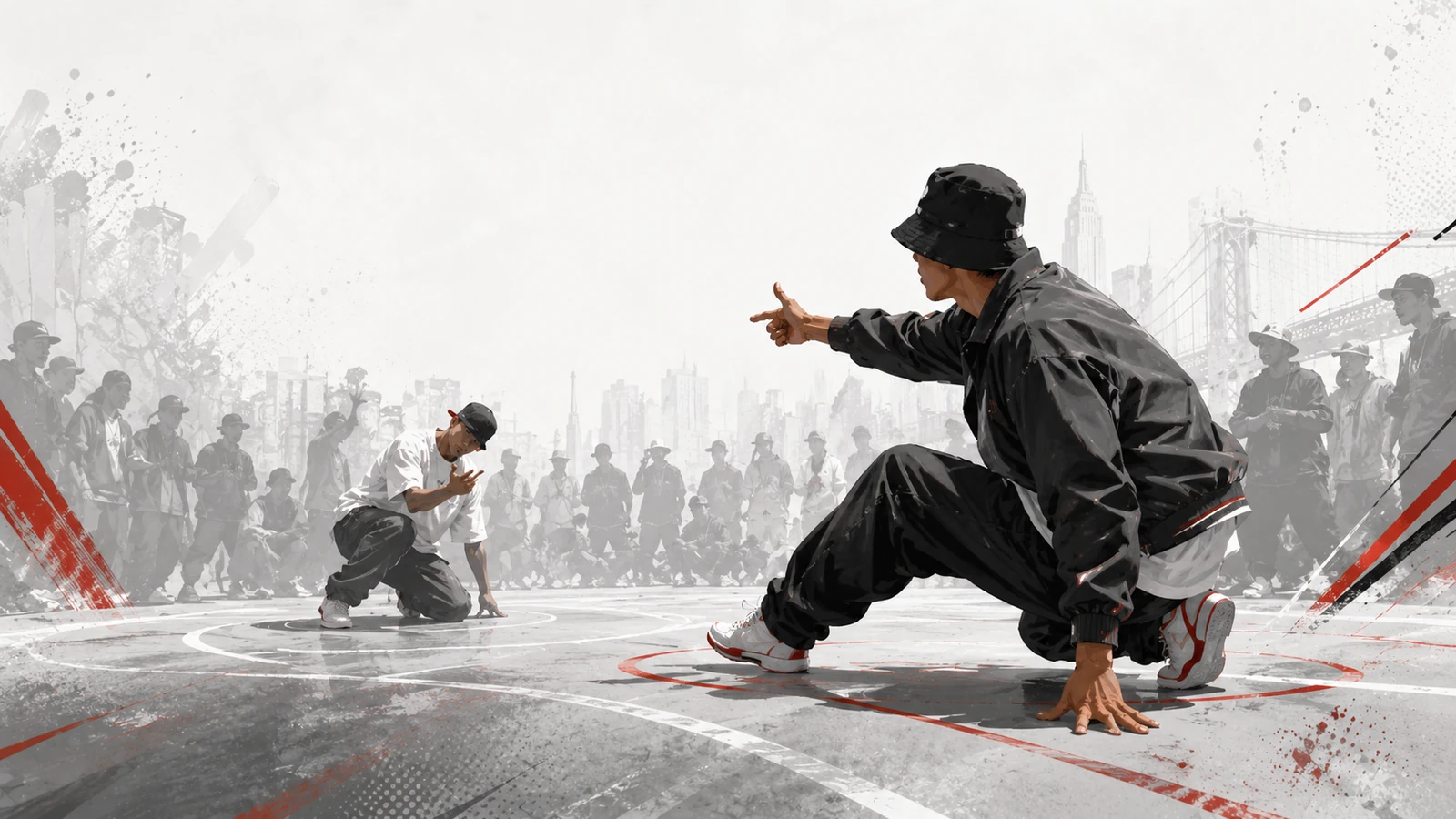
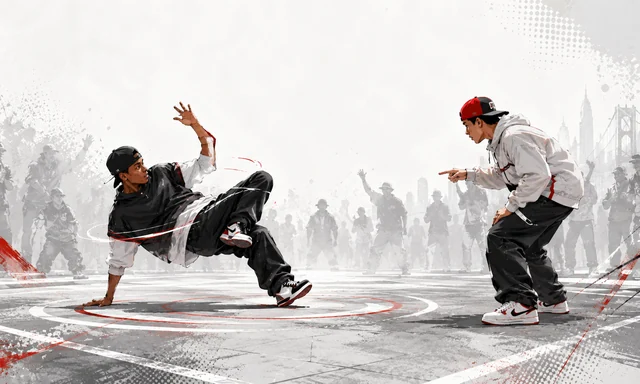
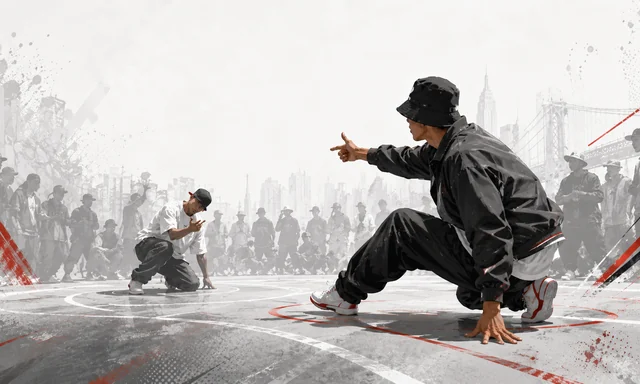
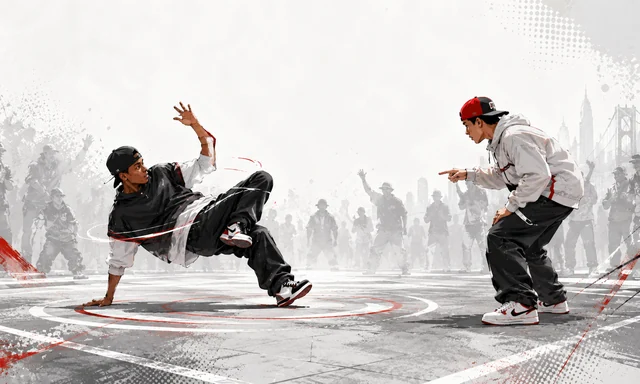
A call out gesture is used to challenge another dancer to enter a cypher or battle. Common call out gestures include pointing at a dancer, making direct eye contact, standing face-to-face with an opponent or using a hand gesture to invite someone into the circle.

A call out can be friendly, aggressive, competitive or strategic depending on the situation.

A burn gesture is a battle action used to challenge, tease or show superiority over an opponent. In battle context, a burn can mean responding to an opponent by doing the same movement better, cleaner, easier or with more complexity.

A call out invites or challenges someone to battle. A burn is a response or action meant to show superiority, tease, challenge or beat an opponent in a specific exchange.

Pointing at an opponent usually directs attention toward that dancer. It can mean challenge, response, accusation, invitation or emphasis depending on the context.

Pointing to the ears often suggests that someone should listen to the music or that their musicality is being questioned.

Pointing to the floor can challenge someone to come down to the floor, respond with floorwork or pay attention to movement happening at ground level.

A repeating gesture is used when a dancer appears to repeat the same movement too often. An opponent may count with one hand or signal repetition to the judges and crowd.

Crowd interaction is when a dancer communicates with spectators through gestures, looks, movement choices or energy to create response and atmosphere.

Yes. Clear gestures can help show battle awareness, musicality, response and confidence. They can also help judges and the crowd understand what a dancer is communicating in the battle.

Not always. Some gestures are playful, some are competitive and some are aggressive. The meaning depends on context, intention and culture. Disrespectful or offensive gestures can cross the line and damage the spirit of exchange.

A good breaking gesture is clear, intentional, musical and connected to the dancer’s round or battle response.

Mocking is making fun of an opponent during a battle. Breakers may use gestures, facial expressions, body language or movement to imitate, tease or criticize another dancer’s style, mistakes or actions.

In breaking, the word burn can have two meanings. In battle, a burn can mean beating your opponent by doing the same movement better, cleaner, easier or with a more complex range of movement or combination.

A burn can also mean a skin injury caused by friction from spinning moves such as headspins, windmills, backspins or other movements that rub against the floor.

A battle burn teaches response, confidence, timing, creativity and how to challenge an opponent directly. A friction burn teaches safe practice, proper clothing, clean technique, body control and protecting the skin when learning spinning moves.

Circle energy

Cyphers

Cypher awareness, floor control, etiquette and how dancers enter and leave the circle.

Related guide: Battles →

A cypher is a circle where dancers enter one by one to dance, exchange energy and represent themselves.

A cypher teaches improvisation, confidence, respect, timing, community awareness and how to respond to others.

Cyphers are important because they are one of the core spaces where breaking is shared, practiced, challenged and celebrated.

Cypher awareness is understanding the space, energy, timing, people and flow of the circle before entering.

Cypher awareness teaches respect, patience, timing, spatial awareness and how to participate without disrupting the circle.

Floor control is the ability to use the dance space with awareness, direction, safety and intention.

Floor control teaches spatial awareness, movement planning, confidence and how to avoid crashing into others.

Circle etiquette is the unwritten behavior of respecting turns, space, music, dancers and the energy of the cypher.

You enter a cypher by reading the space, waiting for the right moment and stepping in with confidence and respect.

You leave a cypher by finishing your round clearly, giving space back to the circle and respecting the next dancer.

Lineage

Crews & Community

Crews, mentorship, oral history, respect, representation and each one teach one.

Related guide: B-Boy & B-Girl →

A dance crew is a group of dancers who train, perform, compete or represent together. In breaking, crews often share knowledge, support each other and build a collective identity within the culture.

A crew teaches teamwork, loyalty, leadership, responsibility, communication and mutual support. Being part of a crew also helps dancers grow through shared experience and mentorship.

Crews are important because they preserve knowledge, build identity, support dancers and represent local or international scenes.

Mentorship teaches knowledge, discipline, history, responsibility and respect between generations.

Lineage is the chain of influence from teachers, crews, mentors, local scenes and previous generations.

Knowledge helps dancers understand the roots, values, history, music, rules of engagement and cultural context of breaking.

Respect is acknowledging the music, culture, space, opponent, elders, dancers and history of breaking.

Respect teaches humility, awareness, sportsmanship, gratitude and responsibility toward the culture.

Breakers earn respect through practice, originality, contribution, humility, battle presence, knowledge, consistency, community support and how they treat others. Winning competitions can build recognition, but respect also comes from character and contribution.

Representation means showing who you are, where you come from, what crew or community shaped you and what values you bring to the dance.

Each one teach one means that knowledge should be shared from person to person. In breaking, it reflects mentorship, community responsibility and the idea that every dancer can help the next generation learn.

Jams & comps

Events

Jams, sessions, workshops, showcases, qualifiers, prelims, finals and battle brackets.

Related guide: Battles →

A jam is a community gathering with music, dancers and culture. It may include cyphers, battles, showcases, DJs, workshops and social exchange. A jam can be a competition, but it is also a cultural meeting place.

A session is a practice gathering where dancers train, exchange, build stamina and share ideas.

A workshop is a class or training session led by a dancer, teacher or expert, often focused on technique, culture, musicality or battle skills.

A showcase is a prepared performance for an audience, often different from an improvised cypher or battle round.

A qualifier is an event or round where dancers compete to earn a place in a larger battle or competition.

A prelim is a preliminary round used to select dancers or crews for the next stage of an event.

A final is the last battle or stage of a competition where the winner is decided.

A judge showcase is a short performance by judges, often used to introduce their style, credibility and signature movements.

A battle bracket is the tournament structure that shows who battles whom and how dancers or crews advance.

Beginner path

Learning Breaking

Practice tips, shoes, safety, injury prevention, beginner mistakes and learning at home.

Related guide: Beginners →

Beginners should start with rhythm, basic toprock, safe go-downs, simple footwork, beginner freezes and respect for the culture.

You need music, comfortable clothes, sneakers, safe floor space and patience. Some dancers use knee pads, wrist support or beanies for protection during practice.

Good breaking shoes should be comfortable, supportive, flexible and have enough grip without sticking too much to the floor.

Practice frequency depends on your level, goals, body and schedule. Consistent short sessions with rest are usually better than occasional unsafe overtraining.

You can improve faster by studying the art form, learning from experienced dancers, practicing foundation, studying music, filming yourself, getting feedback, entering cyphers and gaining battle experience.

Warm up, build strength gradually, use safe surfaces, learn correct technique, rest when needed and avoid forcing advanced moves too early.

Yes, but you need a safe space with enough room. You should still learn from experienced dancers, classes, workshops or cyphers when possible.

It depends on your goals, but most beginners should build foundation first. Basic power moves such as backspins and handglides can be introduced early, but advanced power moves should be learned gradually and safely.

Common beginner mistakes include rushing, skipping foundation, copying others without understanding, ignoring music, not developing rhythm and trying advanced moves too early.

Every beginner should learn rhythm, basic toprock, safe floor movement, simple footwork, basic freezes, warm-ups and respect for the culture.

Safe learning

Kids & Parents

Child-friendly breaking, parent support, safe progression, rhythm games and confidence.

Related guide: Kids →

Breaking can be good for children because it supports coordination, confidence, creativity, discipline, rhythm and social interaction.

Breaking can teach children discipline, coordination, confidence, creativity, teamwork, respect, perseverance and self-expression. It also helps children work toward goals and see progress over time.

Breaking can be safe when taught progressively with warm-ups, age-appropriate movement, safe surfaces and no pressure to do advanced tricks too early. Good supervision is important.

Children can start with rhythm, games, basic steps and safe movement at a young age. Harder movements should be introduced gradually, depending on the child’s body, coordination and confidence.

Parents should know that breaking is a culture, not just tricks. Good teaching includes safety, music, respect, foundation and creativity.

Parents can support a young breaker by finding safe classes, encouraging practice, respecting the culture, supporting events and allowing time for gradual progress.

Archive

Culture & Future

Preservation, documentation, cultural protection, life skills and the future of breaking.

Related guide: History →

Breaking history should be preserved so dancers understand the people, places, music, battles and communities that shaped the culture.

Archives help future generations see who built the culture, how styles changed and what moments shaped the scene. They also help protect the truth when people make false claims about being pioneers, inventing movements or starting earlier than they did.

Documentation through photos, videos, interviews and articles helps preserve events, dancers, crews, battles and cultural memory.

The future of breaking is becoming more professional, organized and global, while still depending on culture, community, music, cyphers, jams and local scenes to stay authentic.

Breaking has evolved through local scenes, international travel, competitions, media, workshops and new generations adding their own style.

Breaking culture can be protected through education, credit, documentation, mentorship, respect, community-led storytelling and support for the people who built the scene.

Breaking is more than tricks because it includes music, history, style, cypher culture, battles, respect, creativity and community.

Breaking teaches resilience, confidence, discipline, creativity, teamwork, leadership, patience and the ability to learn from mistakes.

Breaking teaches respect, originality, perseverance, community, knowledge, courage, creativity and responsibility.

Breaking is important to hip-hop culture because it is one of the core elements connected to the early development of hip-hop. It represents dance, rhythm, competition, self-expression, community and the energy of the cypher.

Someone can contribute by training, teaching, organizing, documenting, DJing, supporting events, mentoring others, preserving history and respecting the culture.

DMCA / Copyright & Corrections

We respect copyright and cultural accuracy.

Breaking history is community-based. If you notice a missing credit, cultural correction, terminology issue, scene-history update or copyright concern, contact dmca@streetdance.com.

Read DMCA / Corrections →