Breaking Section / Kids

Breaking for Kids

Fun, safe movement, rhythm and confidence for young dancers.

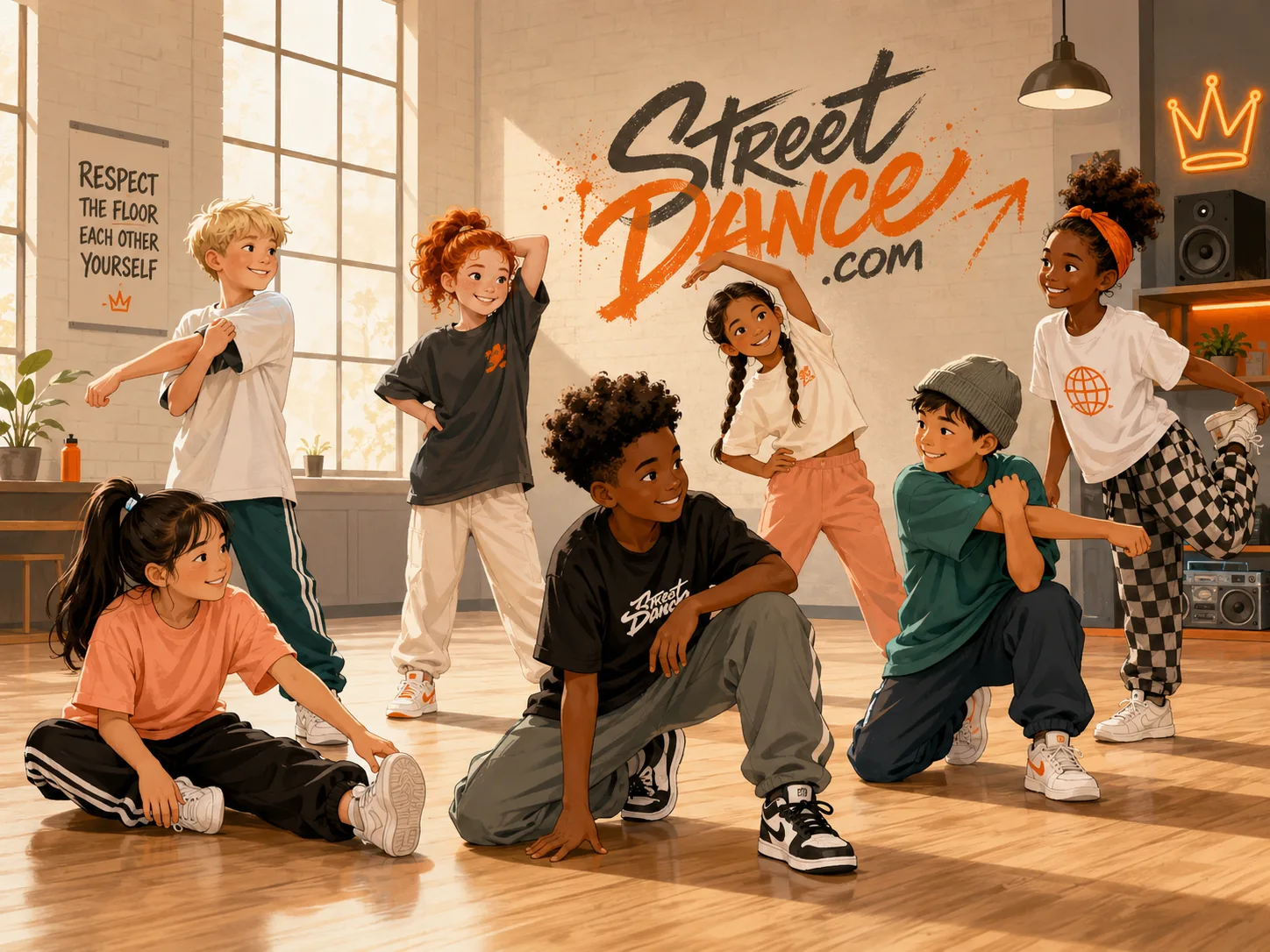
Original diverse illustration of kids warming up for a breaking class

Fun, safe, foundation-based

Breaking for kids should build rhythm, coordination, confidence and creativity before difficult tricks.

Kids Breaking

Movement with confidence

Breaking can be a great dance form for kids because it combines music, movement, creativity, coordination and self-expression. Children can learn rhythm, confidence, balance and discipline while having fun with movement.

For kids, breaking should always start with safety and foundation. The goal is not to push children into difficult tricks, headspins or risky power moves. The goal is to help them enjoy music, understand basic movement and build confidence step by step.

Breaking for kids should feel like play, but it should still teach respect, focus and body awareness.

Kids warm-up before breaking class illustration

Body ready, mind ready, music ready

Before kids start breaking, they should warm up the body. A good warm-up helps protect the wrists, knees, shoulders, neck, back and ankles. It also helps children focus, feel the rhythm and prepare for movement.

A warm-up should never feel like punishment. For kids, it should feel like the first game of the class.

Warm-up ideasLight bouncing, shoulder rolls, wrist circles, ankle circles, gentle knee bends, side steps, easy arm swings, rhythm claps, walking in a circle and freeze-and-go games.

Let kids hear the beat first

Kids should learn to feel the music before learning complicated moves. Breaking comes from rhythm, breaks and musical energy, so children should first learn how to bounce, clap, step and move with the beat.

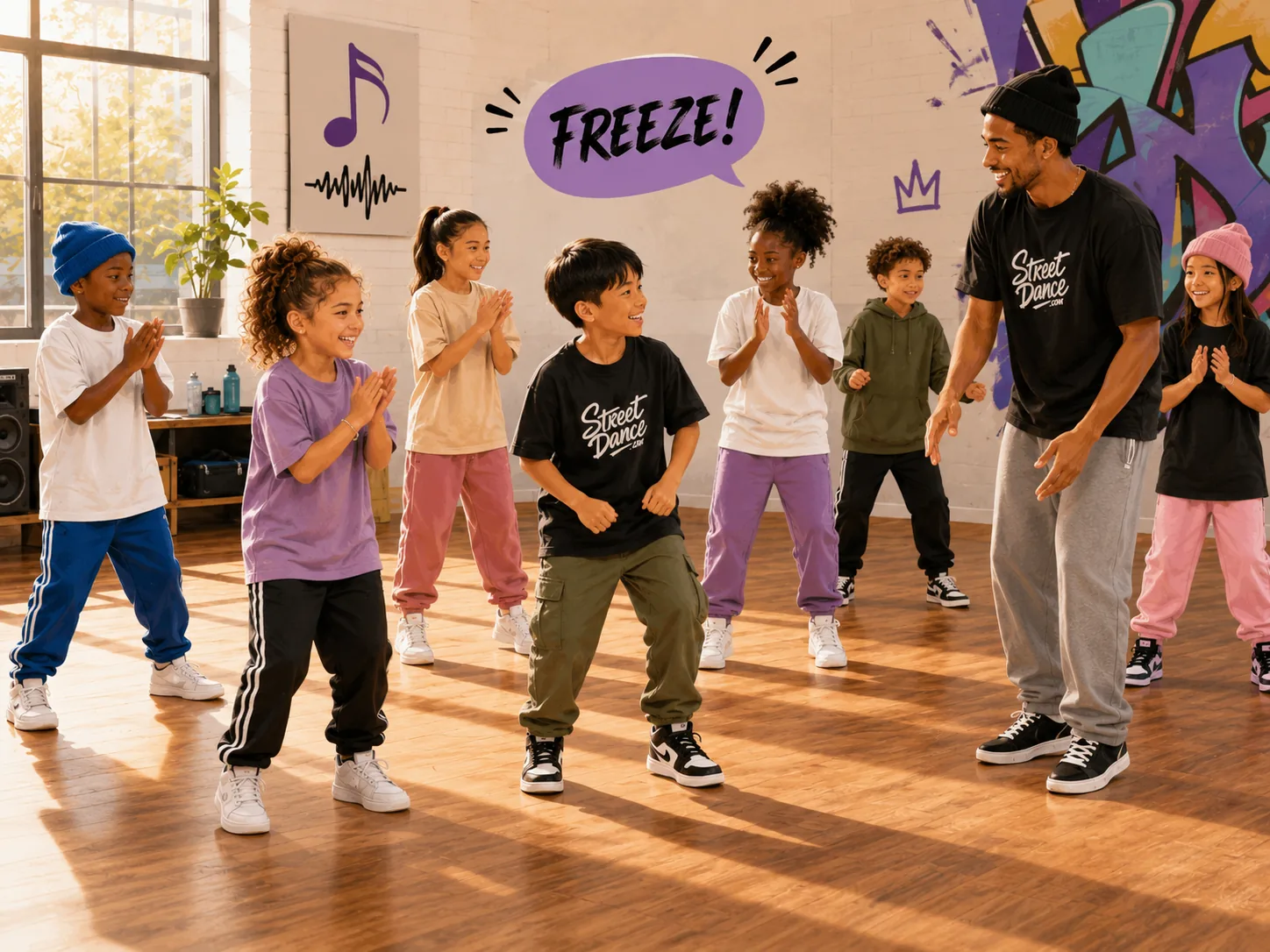
This can be taught through games. A teacher can play a breakbeat or funk rhythm and ask kids to clap on the beat, freeze when the music stops, or move around the room while staying in time.

Practice ideaPlay music, let kids bounce, then call out “freeze.” When the music starts again, they move again. This teaches timing, listening and control.
Kids rhythm game and clapping in breaking class illustration
Kids learning easy toprock illustration

Standing steps, groove and confidence

Toprock is a good place for kids to start because it keeps them standing, helps them hear the music and teaches basic coordination.

Kids can begin with simple side-to-side steps, forward-and-back steps, easy cross steps, bounce with arms, clap-and-step patterns and simple turns. The goal is rhythm, posture, confidence and fun.

Scene noteToprock teaches kids how to enter the music before going to the floor.

Safe movement before tricks

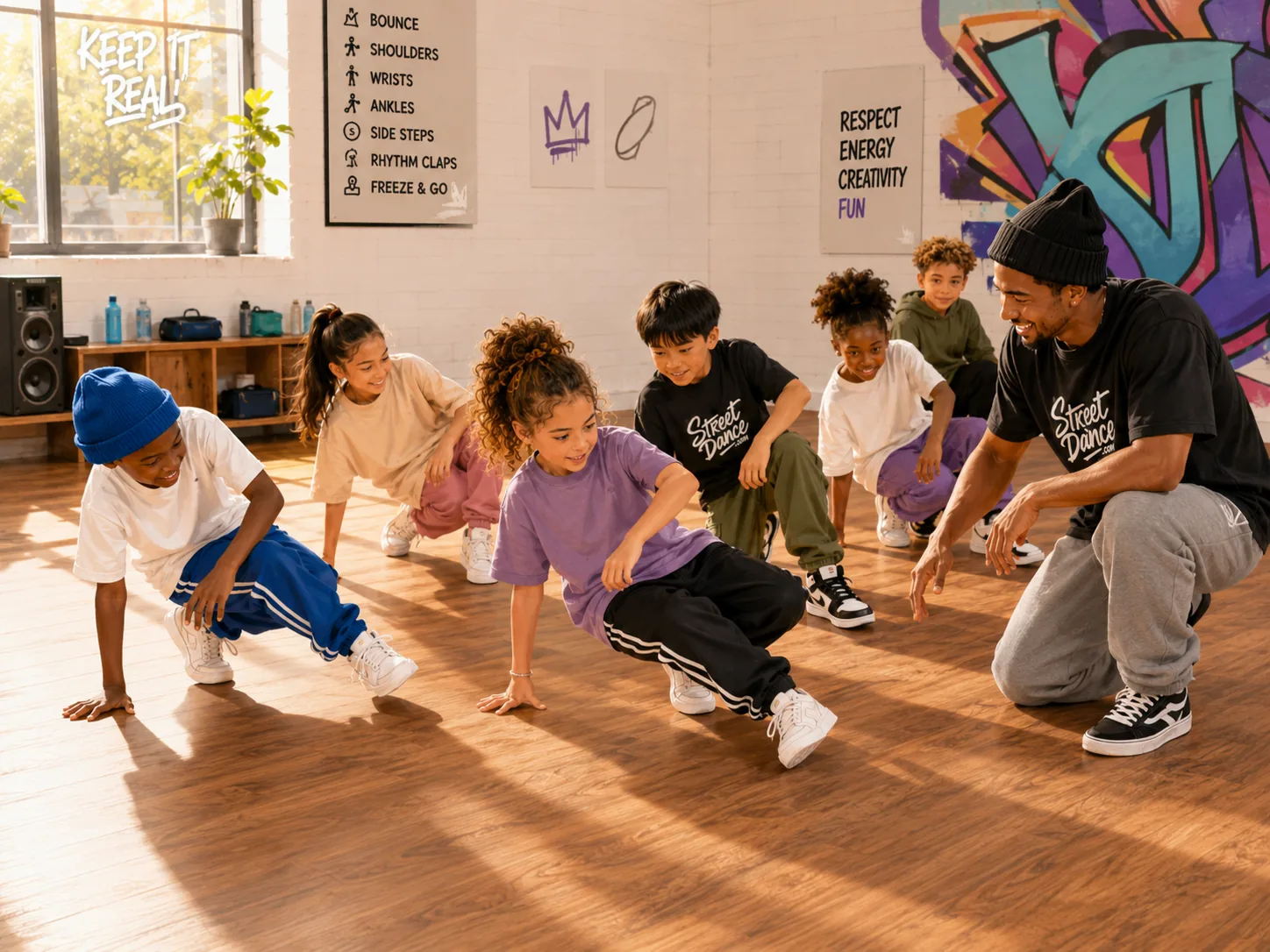
Before kids learn footwork or freezes, they should learn how to move safely on the floor. This means using the hands, knees and feet carefully, keeping space from other kids and learning how to control body weight.

Good floor basics for kids include bear crawls, crab walks, low steps, hand support, safe kneeling transitions, simple floor circles and slow level changes.

Teacher / parent noteThe floor should be clean, safe and not too slippery. Kids need enough space so they do not kick or crash into each other.
Kids practicing safe floor movement basics illustration
Kids learning simple footwork illustration

Coordination, direction and control

Footwork helps kids learn how to move around the body while staying low to the ground. A simplified 6-step idea can be introduced slowly, but it should not be rushed.

For kids, footwork should focus on direction, balance, hand placement, slow control, coordination and rhythm. Even simple floor steps can build strength, focus and confidence.

Practice ideaTeach one or two floor steps first. Let kids repeat slowly with music. Then let them create their own small floor pattern.

Safe stops and balance

A freeze is a controlled stop. For kids, freezes should be simple, safe and age-appropriate. The goal is to learn balance and control, not to force difficult shapes.

Good beginner freeze ideas for kids include standing freezes, kneeling freezes, low balance poses, simple side poses and safe hand-supported freezes.

Scene noteA freeze teaches kids how to stop with control and confidence.
Kids learning first safe freezes illustration

Games and drills

Kids learn best when training feels like a game.

Kids cypher circle game and breaking drills illustration

Freeze game

Kids dance while the music plays. When the music stops, they freeze.

Copy-and-create

One child shows a simple move. The next child copies it and adds one new move.

Cypher circle

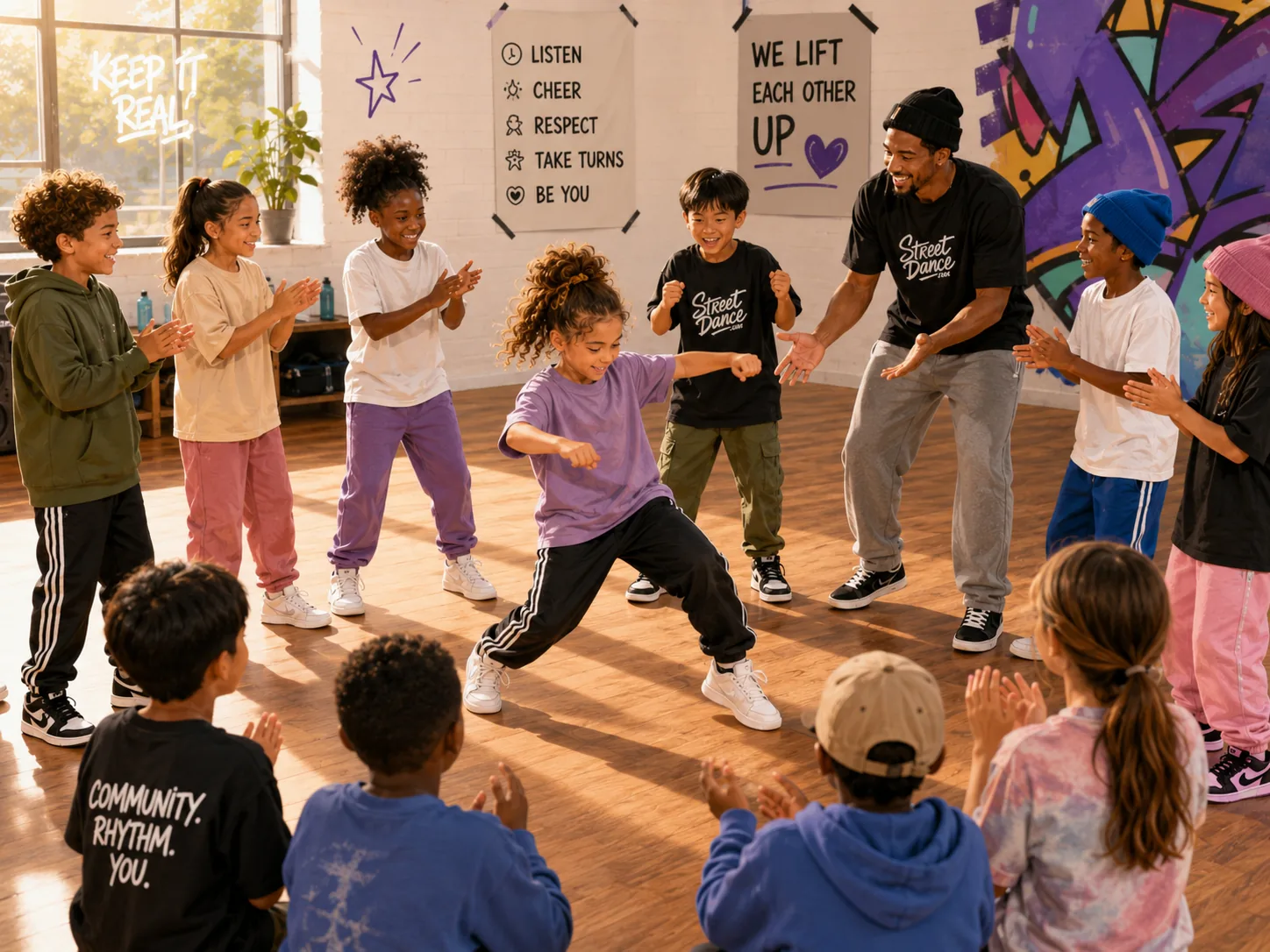
Kids stand in a circle and take turns entering the middle for a short move.

Rhythm clap

Kids clap different rhythms before adding footwork or steps.

Animal movement

Bear crawls, crab walks and low steps help build floor confidence.

Color spots

Place markers on the floor and let kids move between them with safe steps.

Kids confidence teamwork and discipline in breaking class illustration

More than movement

Breaking can help kids develop more than dance skills. It can teach focus, patience, teamwork, confidence and respect.

In a kids class, children can learn how to take turns, respect space, listen to music, support classmates, try again after mistakes, express personality and build confidence through practice.

Culture noteBreaking gives kids a way to be creative while learning discipline.

Keep it fun and age-appropriate

Parents and teachers should understand that kids do not need dangerous moves to enjoy breaking. The best kids classes focus on music, rhythm, coordination, safe floor movement and confidence.

Always warm up first, use enough space, avoid slippery floors, avoid headspins and neck pressure for beginners, teach hand placement, watch for tiredness and make rest part of the class.

Parent noteA good kids breaking class should look energetic, playful, structured and safe.
Safe kids breaking class and teacher guidance illustration

A balanced beginner class

5 min — warm-up game 5 min — rhythm and clapping 10 min — easy toprock 10 min — safe floor movement 10 min — footwork or freeze 10 min — game / cypher circle 5 min — cool down and high-fives

Breaking for Kids FAQ

Common questions about kids breaking, safety, age and beginner moves.

Is breaking safe for kids?

Breaking can be safe for kids when it is taught with proper warm-up, enough space, age-appropriate moves and good supervision.

What age can kids start breaking?

Many kids can start with rhythm games, simple toprock and safe movement at a young age. Difficult freezes or power moves should come later with proper guidance.

Should kids learn power moves first?

No. Kids should start with rhythm, toprock, safe floor movement, simple footwork and basic freezes before learning harder power moves.

What are easy breakdance moves for kids?

Easy moves include basic toprock, simple floor steps, bear crawls, crab walks, standing freezes and safe beginner poses.

Do kids need strength to start breaking?

No. Kids can start with simple movement. Strength, coordination and balance develop through safe practice over time.

Can breaking help kids with confidence?

Yes. Breaking helps kids express themselves, take turns, practice discipline and feel proud when they improve.

What should parents look for in a kids breaking class?

Parents should look for warm-up, safe movement, good spacing, positive teaching, age-appropriate moves and a focus on rhythm and confidence.

Can kids practice breaking at home?

Yes, but they should practice simple moves in a safe space, avoid risky tricks and have adult supervision when needed.