Breaking Section / Beginners

Breaking for Beginners

Start with rhythm, foundation and control before chasing difficult moves.

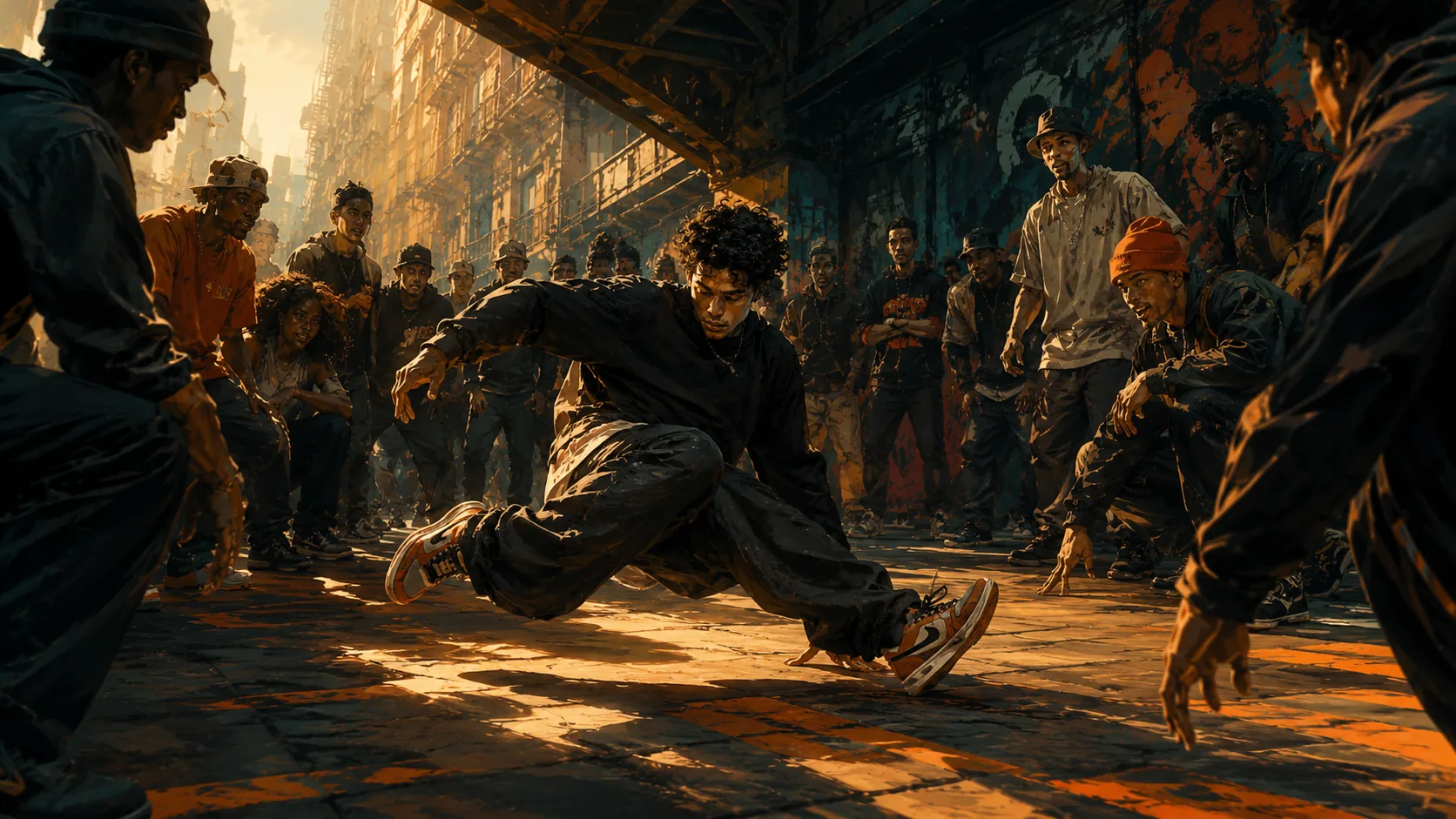
Original illustration of beginner breaking practice in a dance studio

Foundation first

Breaking is powerful, but beginners should build rhythm, control and safe movement step by step.

Start Here

Build a movement language

Breaking is one of the most powerful dance forms in hip-hop culture, but beginners should not start by chasing the hardest moves. The first step is learning how to listen to the music, control the body, understand basic movement and build confidence step by step.

Breaking is not only about tricks. It is about rhythm, style, personality, discipline and how movement is presented. A beginner should first build foundation: basic groove, toprock, simple go-downs, footwork, freezes and safe practice habits.

The goal is not to copy everything at once. The goal is to slowly build a movement language that feels natural, musical and controlled.

Control before difficulty

A beginner should start with the basics that help the whole body understand breaking. That means rhythm, balance, coordination, direction, floor awareness and simple transitions.

Many people want to begin with power moves like windmills or headspins, but that can lead to bad habits or injury if the body is not ready. Foundation gives dancers the control they need before adding difficulty.

Scene noteA beginner with strong basics will grow faster than a beginner who only chases tricks.
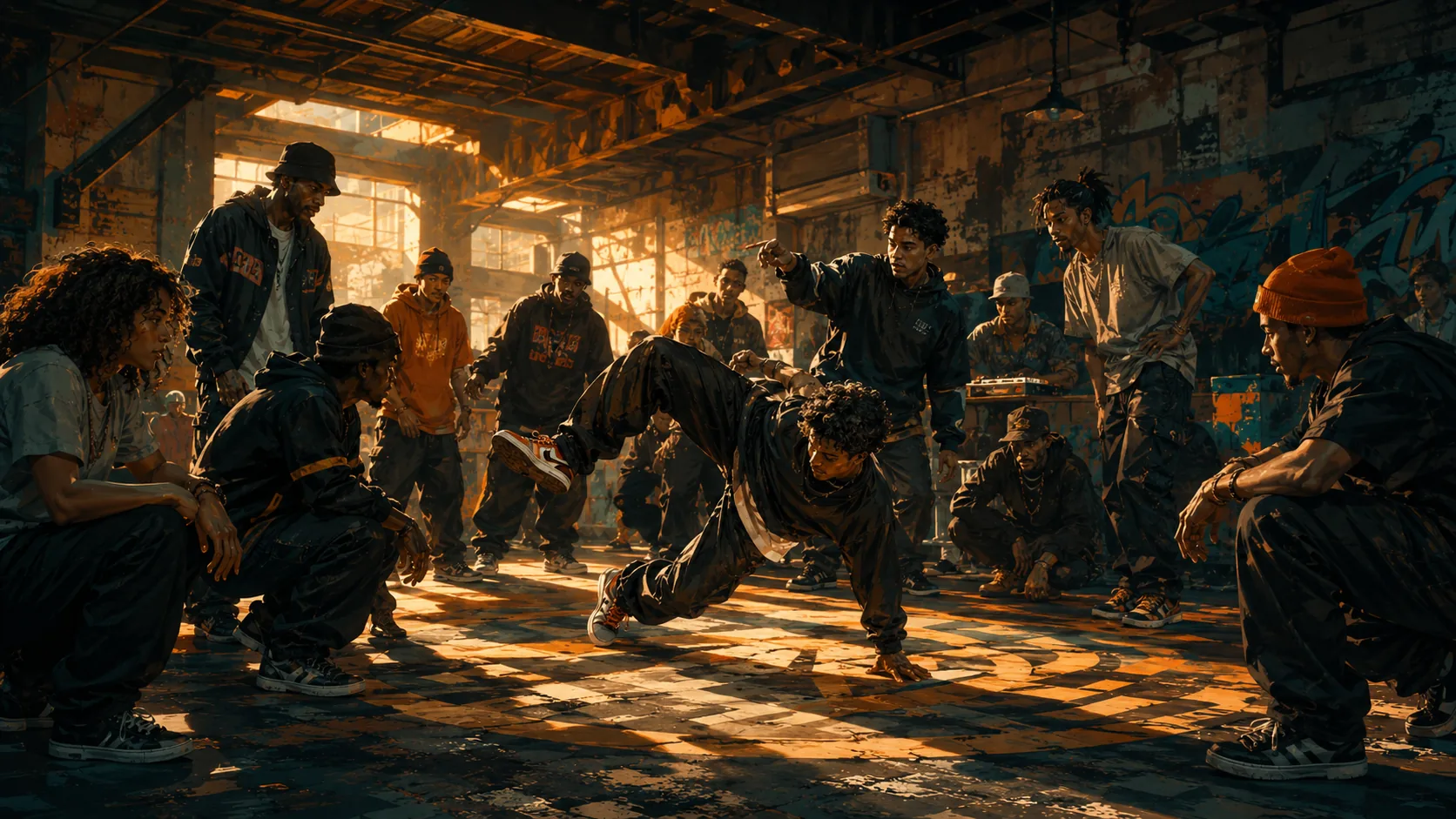
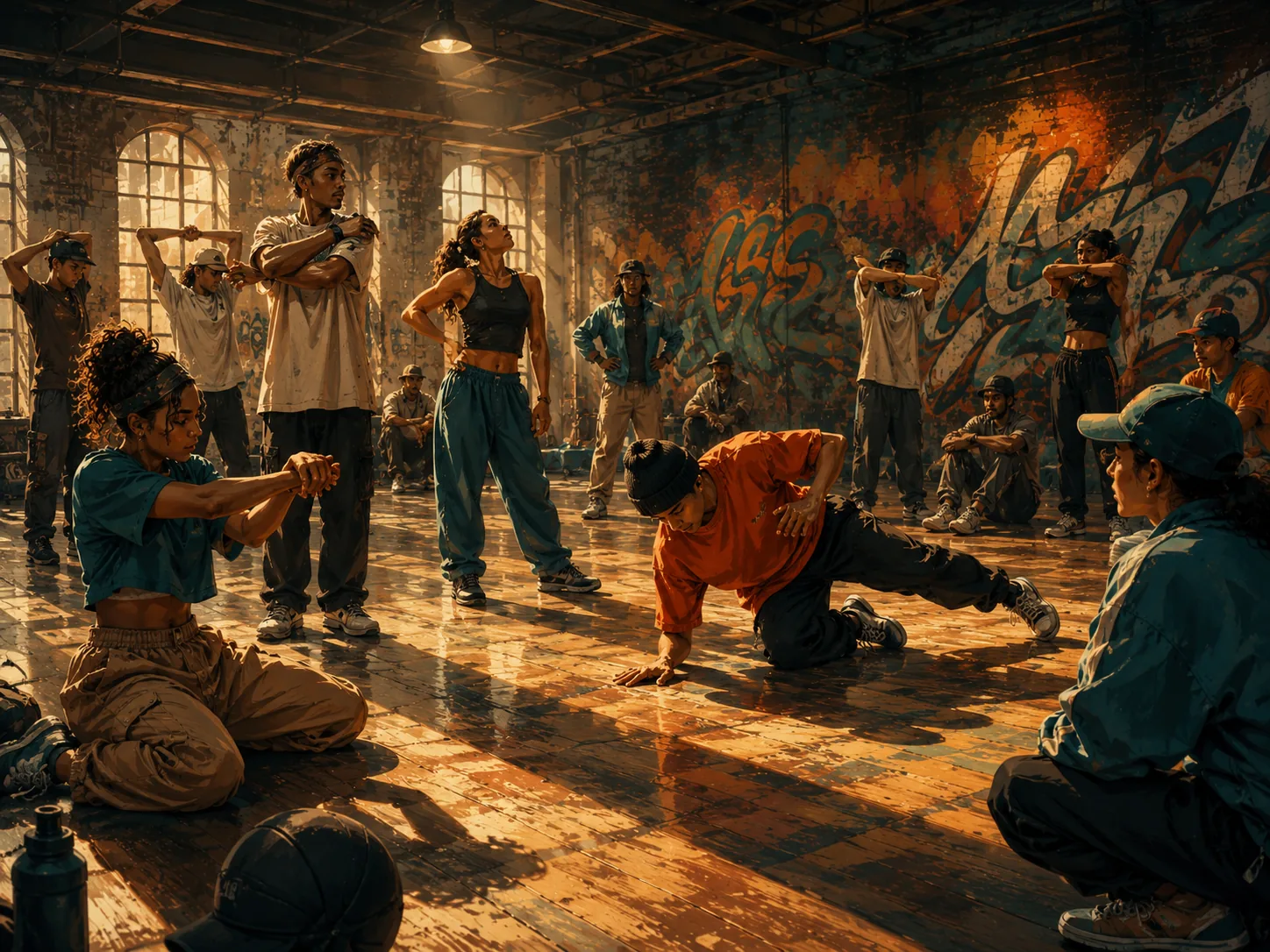
Beginner breaking group learning scene

Hear the beat before the step

Before learning steps, beginners need to learn how to move with music. Breaking is built around the beat, the break and the dancer’s response to sound.

Rhythm does not mean doing complicated moves. It starts with bounce, timing, posture and feeling where the beat lands. A simple step done with rhythm is stronger than a difficult move done without connection to the music.

Practice ideaPlay a breakbeat or funk track. Stand still first. Find the beat. Add a simple bounce. Then add basic steps without rushing.
Beginner rhythm and bounce breaking practice illustration
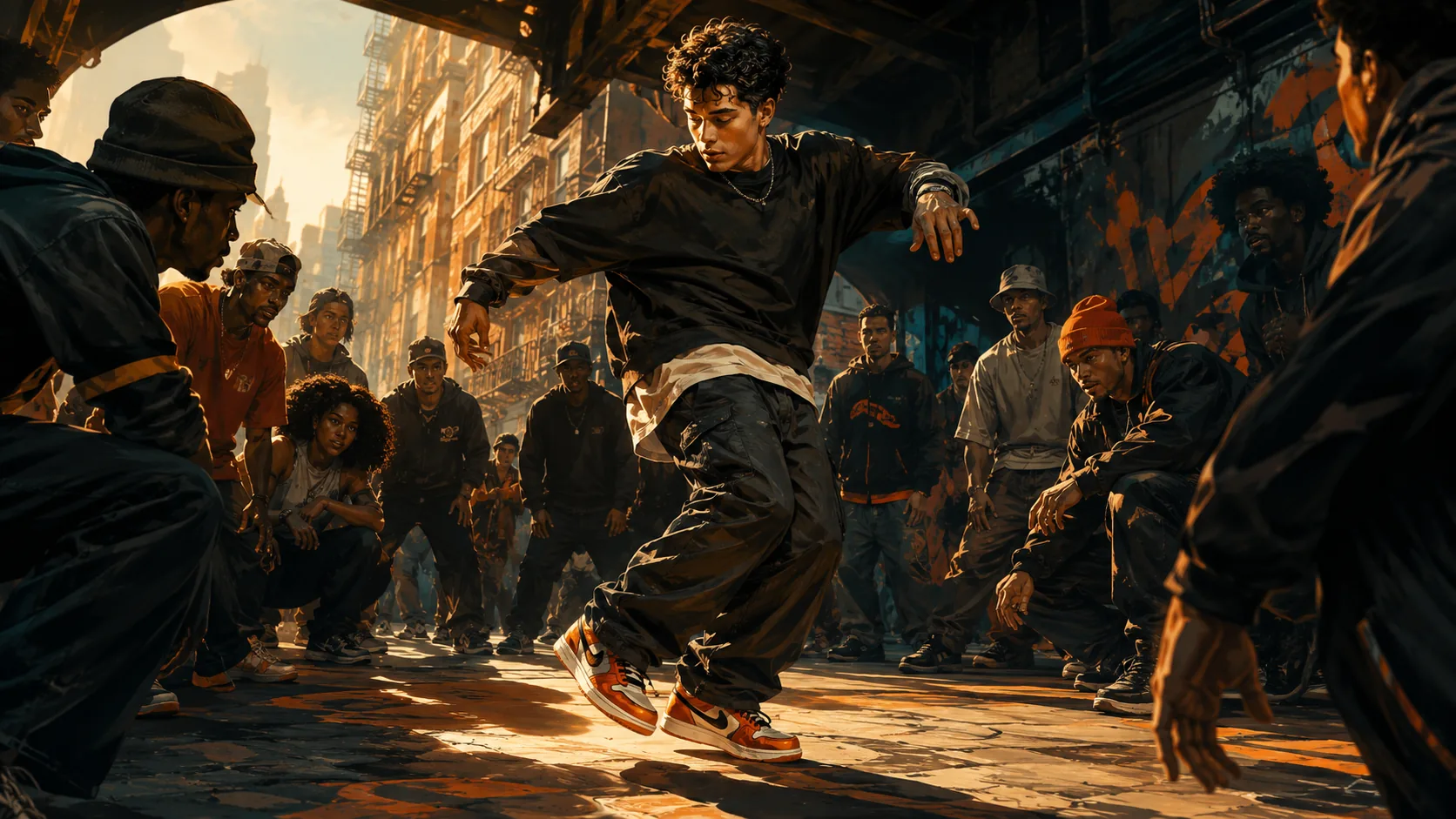
Beginner toprock illustration

The standing foundation

Toprock is the standing foundation of breaking. It is usually the first thing people see when a dancer enters the floor. For beginners, toprock teaches rhythm, posture, confidence, direction, coordination and personal style.

Basic toprock does not need to be complicated. A beginner can start with simple steps and focus on timing, body control and groove. The arms, shoulders and upper body should feel connected to the steps, not separate from them.

Scene noteToprock is not filler. It is how you introduce yourself to the music and the cypher.

Enter the floor safely

A go-down is how a dancer moves from standing to the floor. Beginners should learn safe and simple entries before trying fast drops or risky movements.

A good go-down should feel connected to the toprock. It should not look like the dancer suddenly stops and falls to the ground. The entry is part of the flow.

Scene noteThe way you enter the floor matters. It sets up everything that comes after.
Beginner go-downs and entries illustration
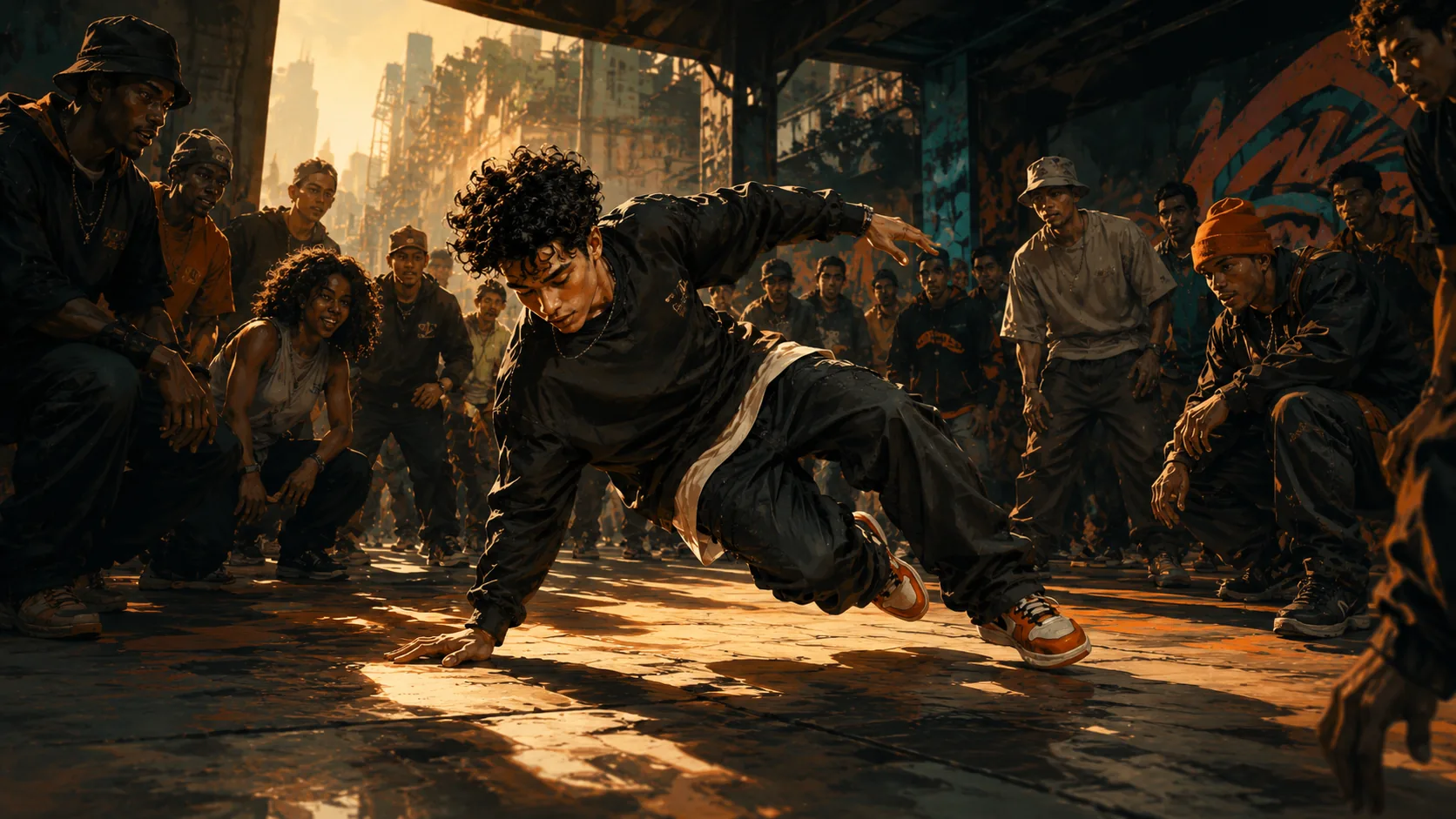
Beginner footwork and 6-step illustration

The floor language

Footwork is the floor language of breaking. Beginners often start with the 6-step because it teaches direction, coordination and body position.

Footwork is more than memorizing a pattern. It teaches how the dancer moves around the body, shifts weight, uses hands for support and keeps rhythm while close to the ground.

Practice ideaLearn the 6-step slowly. Then practice it with music. Do not rush. Make sure each step has clear placement and control.

Where control becomes visible

A freeze is a controlled stop or held position. For beginners, freezes teach balance, strength and body awareness.

A common beginner freeze is the baby freeze, but the exact first freeze depends on the dancer’s body, strength and comfort level. The important thing is learning how to place weight safely and hold control without forcing the neck, shoulders or wrists.

Scene noteA freeze is where control becomes visible.
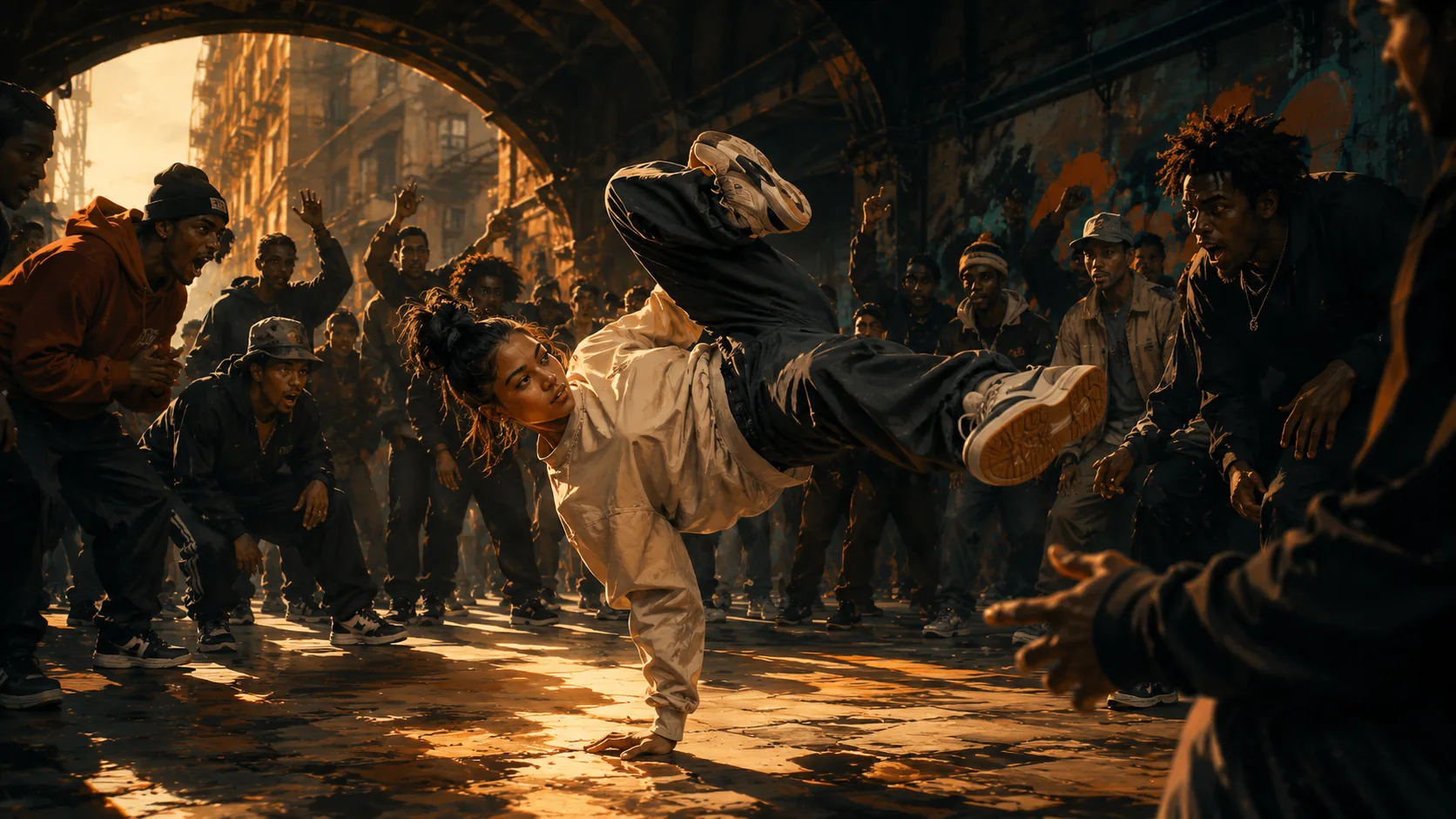
Beginner freeze practice illustration

Connect the basics

Once a beginner has basic rhythm, toprock, a go-down, footwork and one freeze, they can start building short combinations. The goal is not to make the longest round. The goal is to connect movements so they feel like one idea.

basic toprocksimple go-down6-stepbaby freezeexit or reset
Beginner breaking combination illustration

Train smart from day one

Breaking uses the whole body. Beginners should take safety seriously from the beginning. Protect the wrists, shoulders, neck, back, hips, knees and ankles.

Warm up before training. Stretch after training. Build strength slowly. Do not force power moves too early. Learn how to place hands, shift weight and fall safely.

Scene noteTraining smart helps you stay in the culture longer.
Beginner safe practice and stretching illustration

Beginner practice plan

Simple practice structures for rhythm, toprock, footwork, freezes and short combinations.

15 minutes

Quick session

  • 3 minutes — bounce and rhythm
  • 4 minutes — basic toprock
  • 3 minutes — simple go-downs
  • 3 minutes — 6-step or basic footwork
  • 2 minutes — beginner freeze practice
30 minutes

Full beginner session

  • 5 minutes — warm-up and bounce
  • 5 minutes — toprock
  • 5 minutes — go-downs
  • 7 minutes — footwork
  • 5 minutes — freezes
  • 3 minutes — short combination with music
Weekly focus

Repeat basics

  • Day 1 — rhythm and toprock
  • Day 2 — go-downs and footwork
  • Day 3 — freeze control
  • Day 4 — short combinations
  • Day 5 — freestyle with music

The culture is built through exchange

Breaking grows faster when dancers practice around other people. A beginner can learn a lot by watching cyphers, attending classes, joining practice sessions or training with more experienced dancers.

Being around the scene teaches things that videos cannot fully explain: timing, energy, respect, cypher awareness, how dancers enter and exit, how people respond to music and how foundation is passed on.

Beginner breaking learning with others illustration

Breaking is not a race

Beginners should avoid rushing into difficult moves without foundation. Common mistakes include copying power moves too early, ignoring rhythm, skipping toprock, doing footwork too fast before it is clean, forcing freezes without control, practicing without warming up and only learning from short clips without understanding context.

Build slowly and build correctly.

Breaking for Beginners FAQ

Common questions about starting breakdance safely and building foundation.

How do I start learning breaking?

Start with rhythm, basic toprock, simple go-downs, beginner footwork and one safe freeze. Practice with music and focus on control before difficulty.

What is the easiest breakdance move for beginners?

Many beginners start with basic toprock, simple floor entries, 6-step and a beginner freeze such as a baby freeze.

Should beginners learn power moves first?

No. Power moves require strength, control and body awareness. Beginners should build foundation first.

How long does it take to learn breaking?

You can learn basic movements in a few weeks, but developing style, confidence, rhythm and control takes longer. Breaking is a long-term practice.

Can I learn breaking at home?

Yes, you can start at home with basic rhythm, toprock and simple footwork, but it helps to eventually practice with other dancers or a teacher.

Is breaking safe for beginners?

Breaking can be safe when practiced correctly. Warm up, progress slowly, protect wrists and shoulders, and avoid rushing advanced moves.

What should I practice every day?

Practice rhythm, toprock, basic footwork, one go-down, one freeze and short combinations with music.

Do I need to be strong to start breaking?

You do not need to be very strong to start, but strength, mobility and control will develop through consistent training.