Breaking Section / Moves

Breaking Moves

Foundation, rhythm, control and expression: from toprock and footwork to freezes, power moves and cypher response.

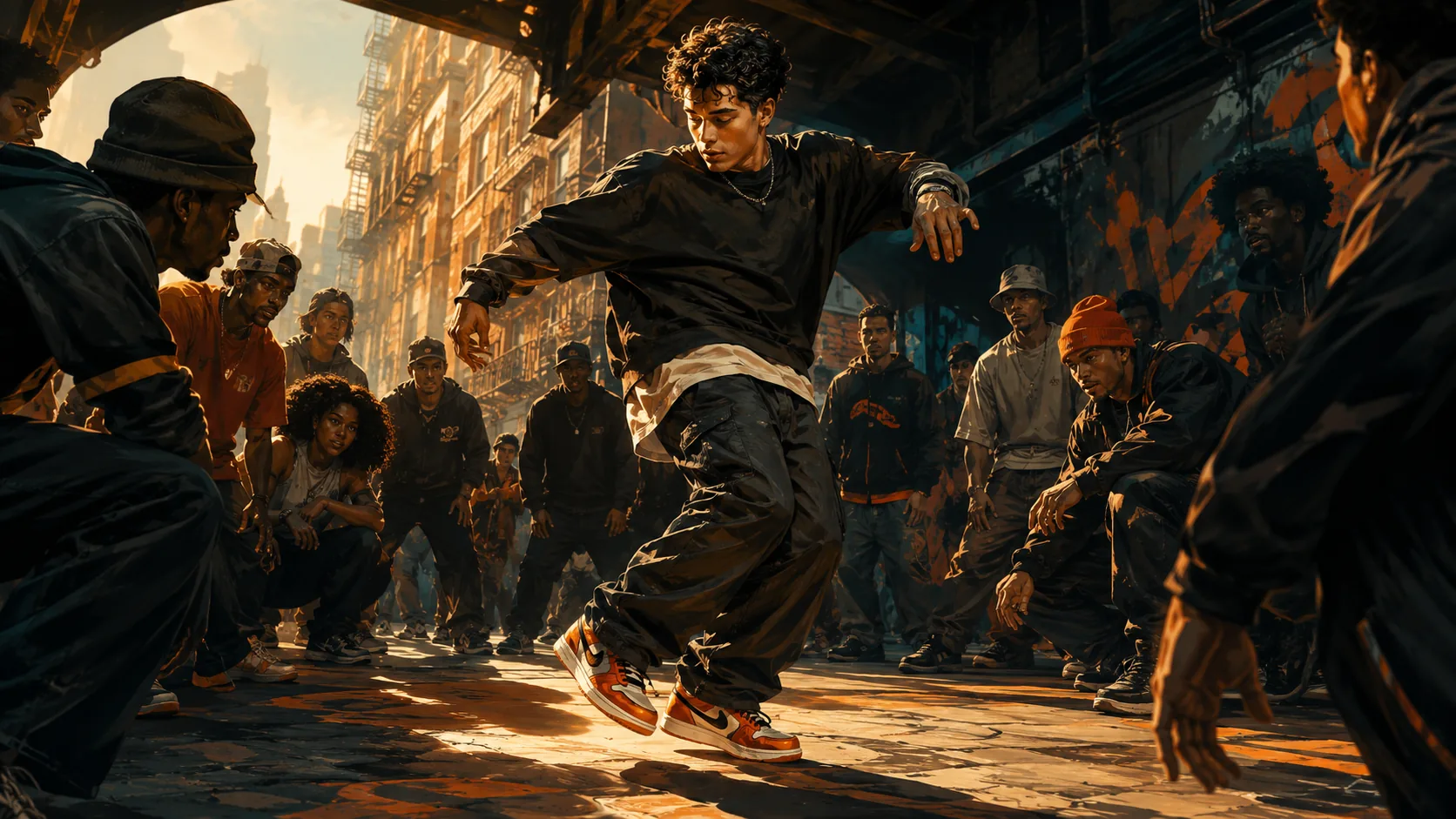
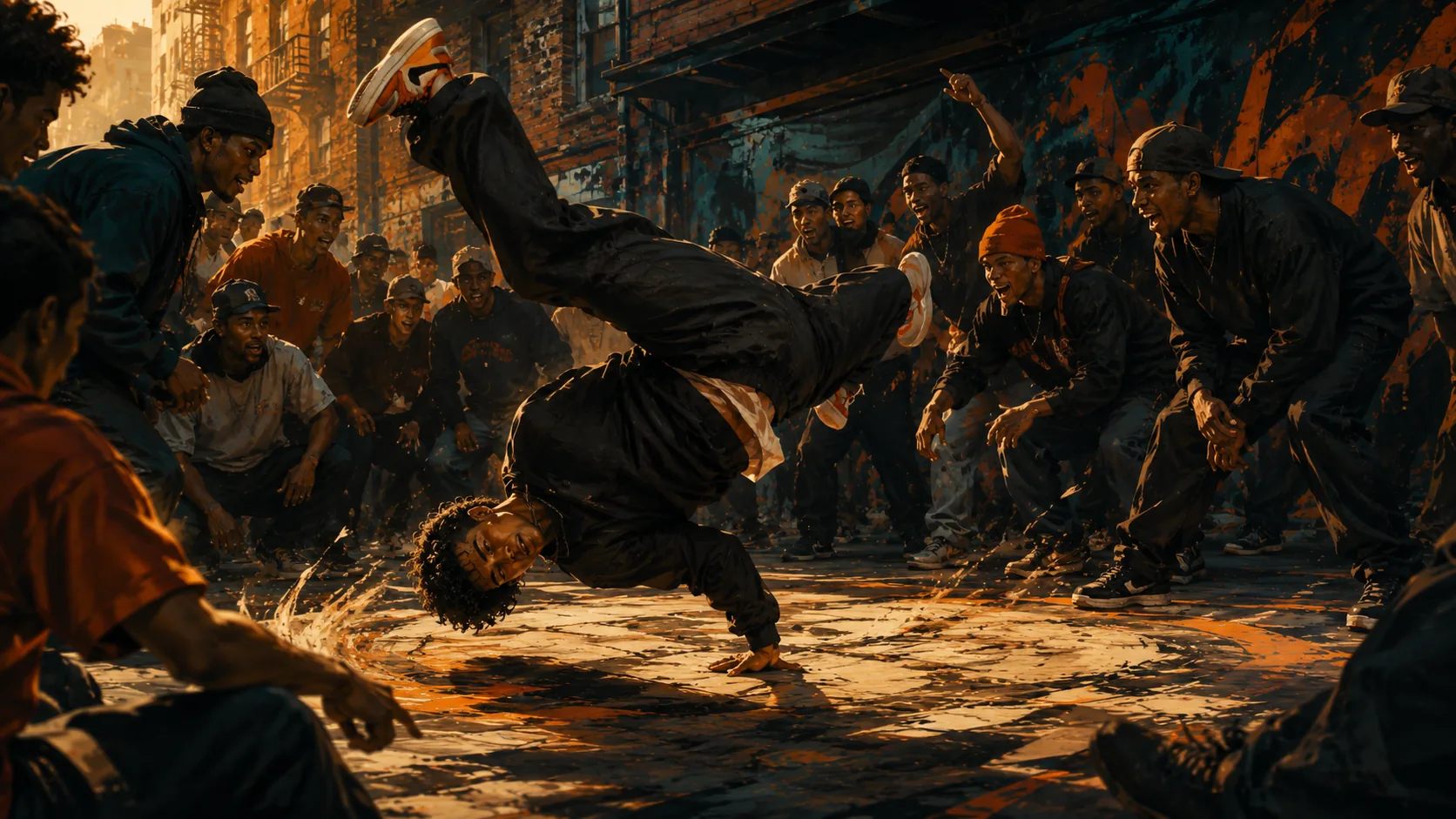
Original illustration of a breaking cypher and toprock energy

Foundation before tricks

Breaking moves are tools for rhythm, identity, control and battle communication.

Scene Note

Moves are not just tricks

Breaking moves are often grouped into toprock, go-downs, footwork, freezes and power moves. But in the culture, moves are not just tricks or isolated steps. They are part of how a b-boy or b-girl enters the music, builds flow, shows style, answers energy and develops identity.

A move matters, but how it connects to the beat, how it is executed on the floor, how it is presented in the cypher and how it reflects the dancer’s own personality matters even more. Foundation comes first. The stronger the foundation, the stronger the movement language becomes.

Tools, not trophies

Breaking moves help a dancer move through different levels, respond to the music and build a complete round. A clean round is not only about doing many moves. It is about timing, transitions, rhythm, control, character and originality.

In breaking, the movement usually travels through different zones: standing, entering the floor, floor movement, freezes, power and re-entry. Every dancer builds their own relationship with these zones. The goal is not to copy a list of moves forever, but to use those moves to build your own voice.

Breaking cypher response scene illustration
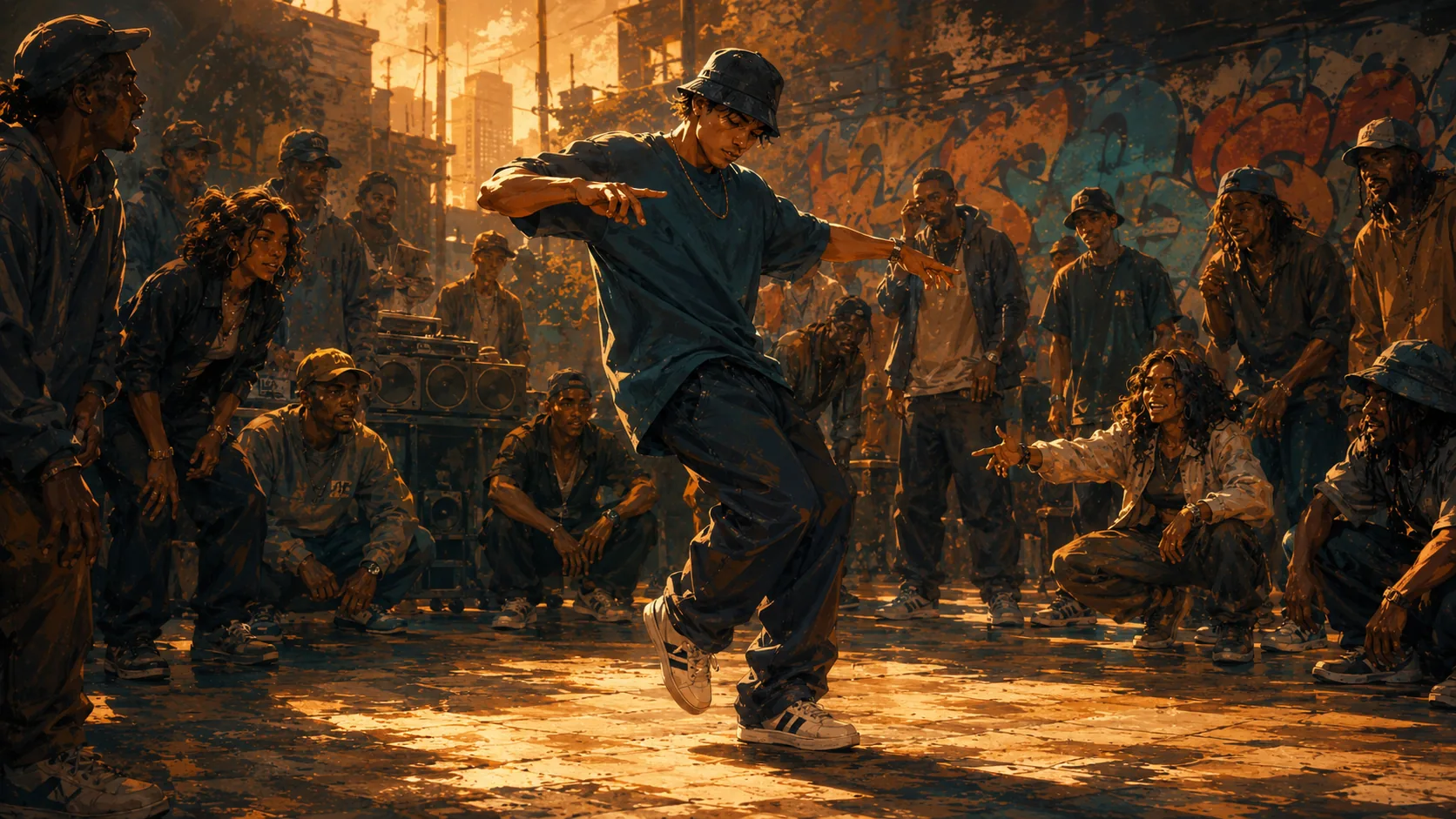
Toprock breaking moves illustration

The standing foundation

Toprock is the standing part of breaking. It is often the first way a dancer enters the floor, introduces rhythm and claims space. Good toprock is not just warm-up movement. It shows attitude, confidence, timing, character and control.

Toprock teaches how to move with the beat before going to the floor. In battles and cyphers, toprock can also be a way to speak before the floorwork begins. A simple step with the right groove often says more than a complicated pattern with no rhythm.

Scene noteToprock is one of the clearest places where personal style starts to show.

The bridge into the floor

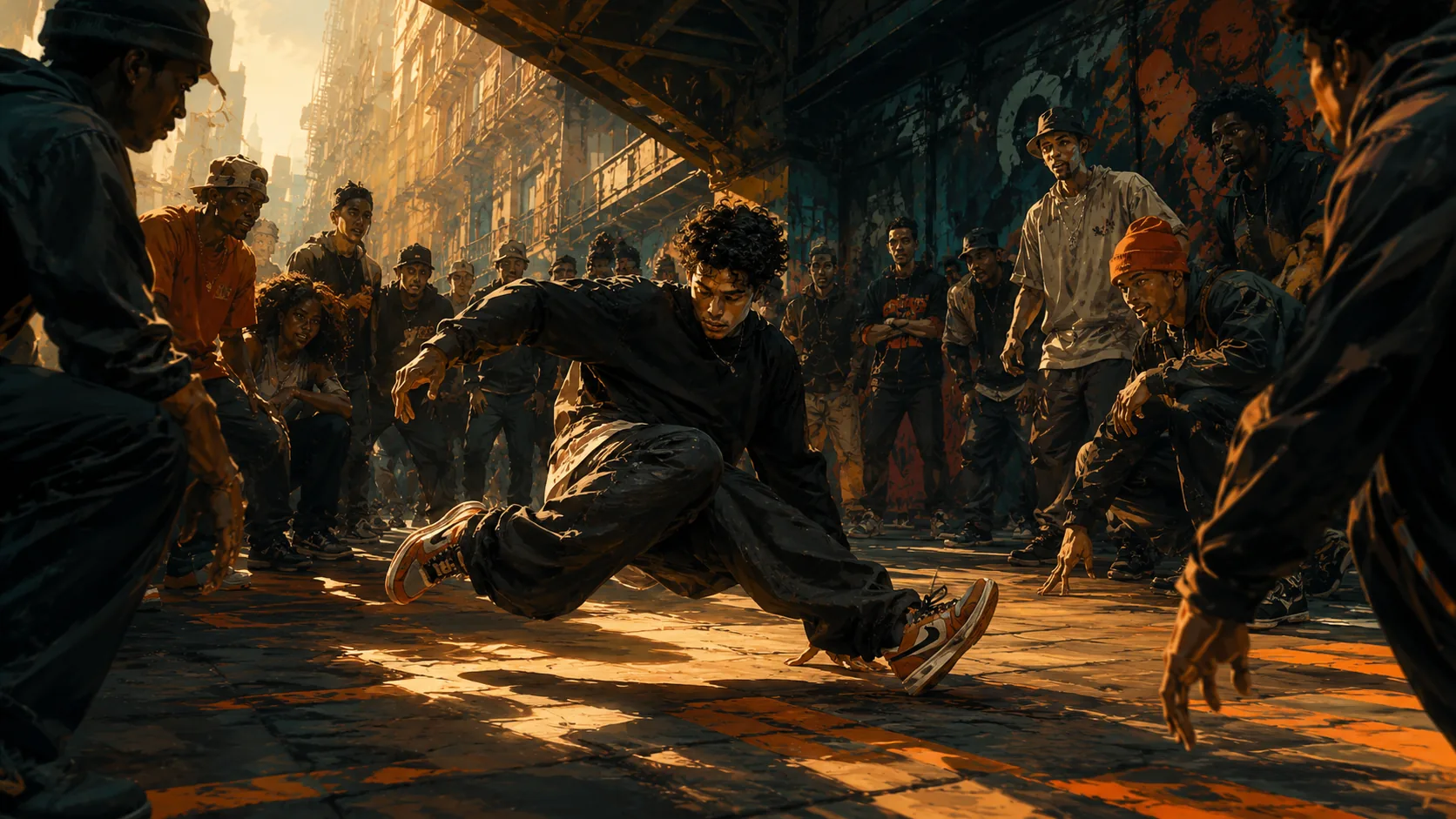
Go-downs, drops and entries are the transitions that take a dancer from standing movement to the ground. They are important because they connect the upper part of the round to the floor section. A good entry is clean, intentional and musical.

Some go-downs are smooth and controlled. Others are sharp, dramatic or aggressive. The important part is not only how the entry looks, but how naturally it connects from the toprock into footwork or a freeze.

Scene noteA round should not feel like separate pieces. The entry helps the round breathe as one continuous idea.
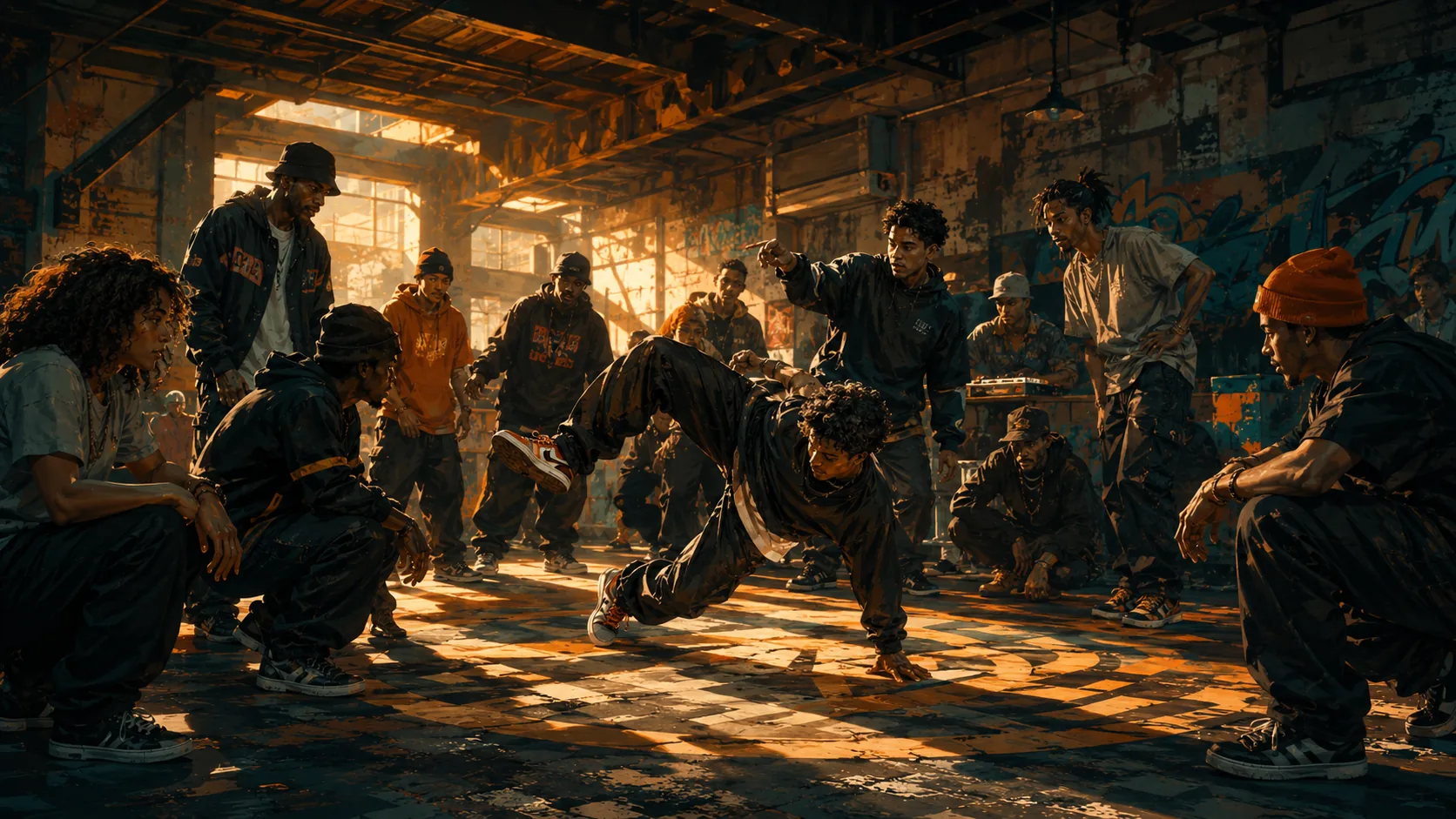
Go-downs and entries breaking move illustration
Footwork breaking moves illustration

The language of the floor

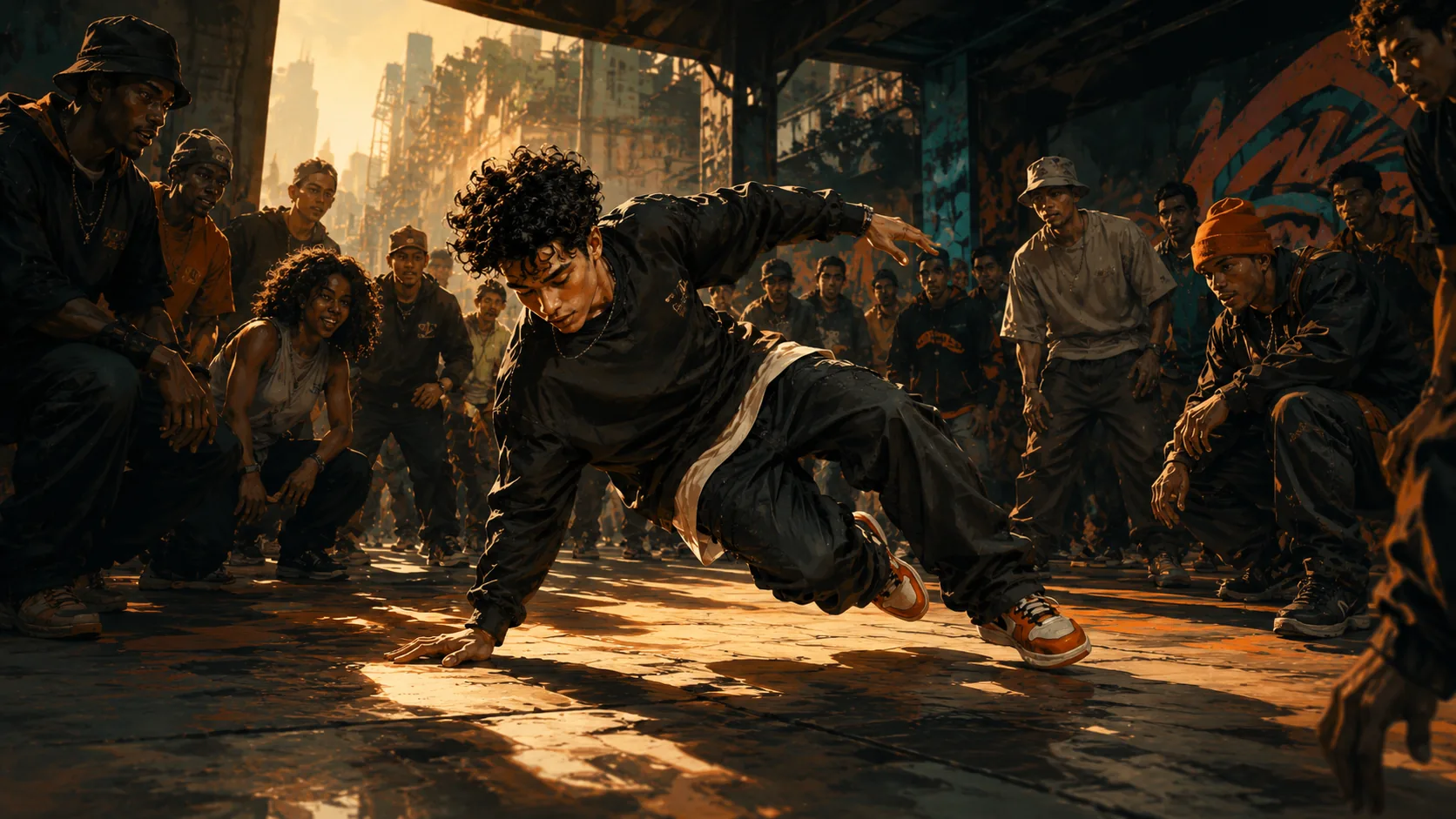
Footwork is one of the deepest parts of breaking. This is where dancers build rhythm, direction, timing, spacing and originality on the floor. Many people begin with 6-step, but footwork is much bigger than one pattern.

Footwork includes switches, variations, pathways, timing changes, leg placement, level changes and flow around the body. Clean shape, timing and direction matter more than speed alone.

Scene note6-step is important, but it is not the whole story. Footwork grows through rhythm, spacing and variation.

Control, punctuation and impact

A freeze is a controlled stop or held position that creates emphasis. In a round, a freeze can function like punctuation. It can hit the beat, end a phrase, answer an opponent, change the energy or give shape to the movement.

Freezes require balance, body awareness and precision. They are not only about holding a difficult shape. They are about when and why the freeze is used.

Scene noteA freeze is not just a pose. It is a statement.
Freeze breaking move illustration
Power moves breaking illustration

Momentum, rotation and explosive movement

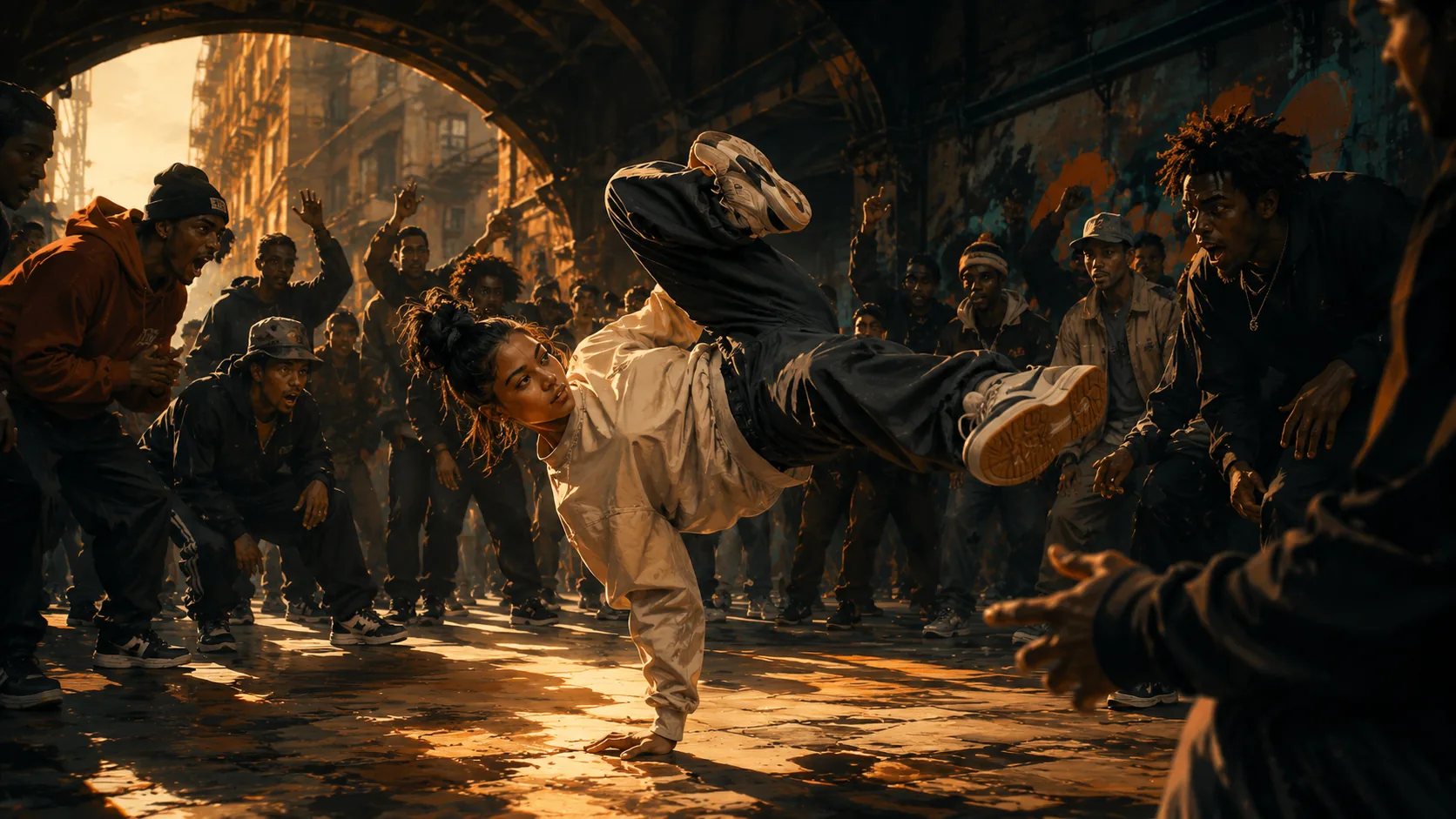
Power moves are dynamic rotational movements in breaking, such as windmills, backspins, headspins and other traveling or circular patterns. They require momentum, timing, body alignment, stamina and repetition.

Power is often the most visible part of breaking to outside audiences, but in the culture it is only one part of the whole. Without rhythm, placement and control, power becomes empty. When used with musicality and structure, power can raise the energy of a round.

Scene notePower without foundation is unstable. Power with rhythm and control becomes part of the language of breaking.

A round is more than a list

Breaking is not about collecting separate moves and dropping them one by one. A round becomes meaningful when the dancer connects the parts: toprock into entry, entry into footwork, footwork into freeze, freeze into power, power into exit or response.

Connection is where flow lives. Even simple material can feel powerful if the transitions are clean and the structure makes sense. A dancer who understands connection can do less and still say more.

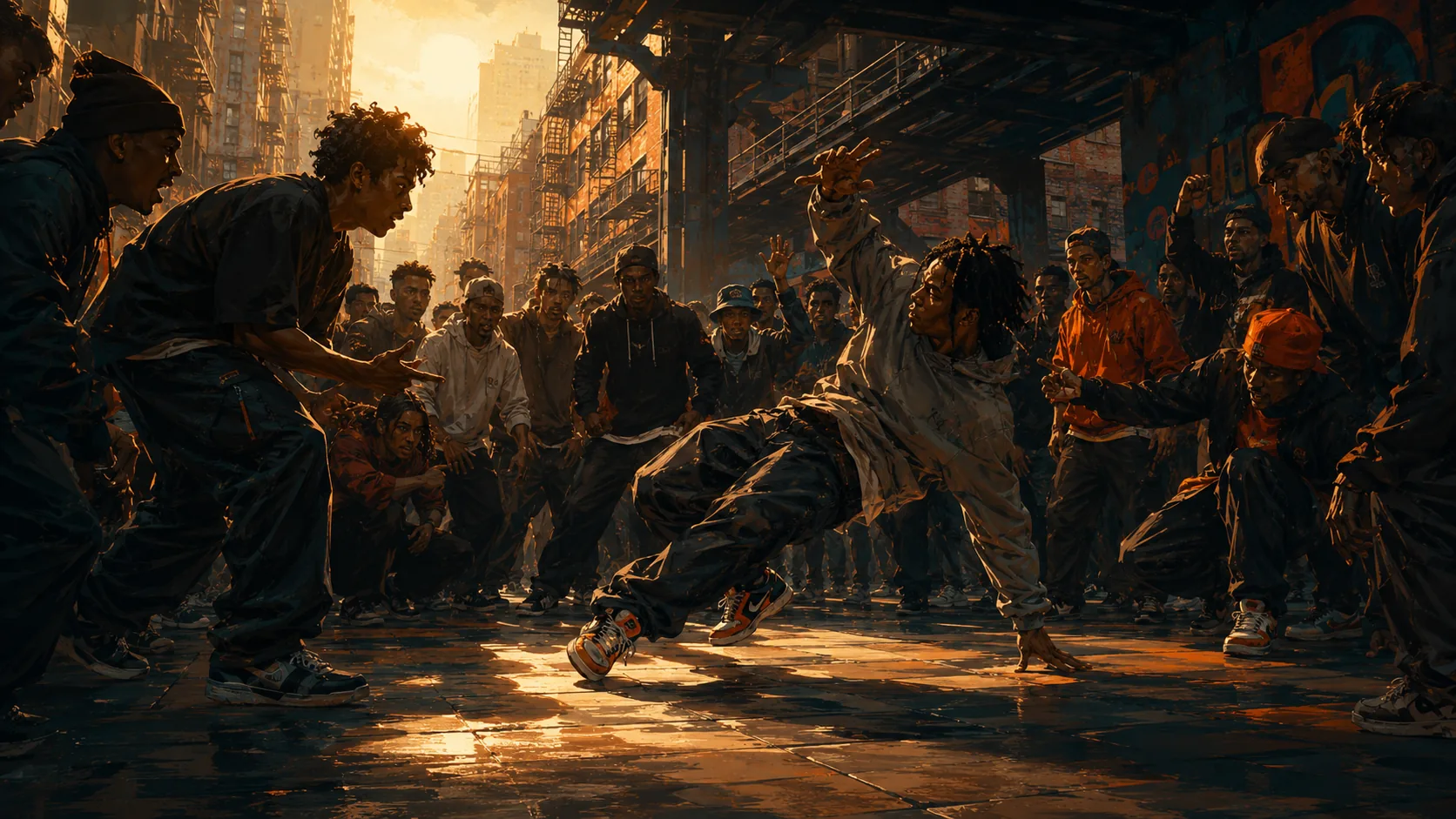
Cypher battle response illustration
Beginner breaking practice and drills illustration
Beginner Practice

Build slowly and correctly

Beginners should focus on rhythm, posture, clean transitions and simple control before chasing difficult power. Clean repetition teaches more than rushing through many moves.

  • basic toprock for timing and groove
  • one or two go-downs
  • basic footwork such as 6-step
  • one clean beginner freeze
  • short round-building practice with music
Crew practice breaking session illustration
Crew Practice

Learning with others

Breaking has always grown through shared practice. Crew sessions help dancers build discipline, exchange ideas, push each other and develop stronger rounds.

Even when breaking is personal, it is rarely built alone. Crew practice is one of the spaces where knowledge is sharpened and passed on.

Protect the body, protect the progress

Breaking places stress on wrists, shoulders, neck, back, hips and knees. Safe training matters. Warm up before drills. Build mobility and core strength. Progress step by step. Do not rush power. Learn how to fall, place weight and recover correctly.

Rest is also part of training. So is repetition with control. Injury often comes from skipping basics, forcing range or repeating movements with bad form. A strong breaker is not only a hard worker, but a smart worker.

Breaking Moves FAQ

Common questions about breakdance moves, foundation and safe practice.

What are the main types of breaking moves?

The main move groups are toprock, go-downs or entries, footwork, freezes and power moves.

Is 6-step the most important move in breaking?

6-step is one of the key foundations, but it is not the whole of footwork. It teaches flow, direction, coordination and basic floor structure.

What is the easiest breaking move for beginners?

Many beginners start with basic toprock, simple go-downs, 6-step and a beginner freeze such as a baby freeze.

Are power moves required to be a good breaker?

No. Power is one part of breaking. Strong breakers can also be respected for style, footwork, freezes, rhythm, originality and battle presence.

What is the difference between a freeze and a power move?

A freeze is a controlled stop or held position. A power move uses rotation, momentum and dynamic movement.

Why is toprock important?

Toprock helps dancers enter the music, show presence and begin a round with rhythm, style and confidence.

How should a beginner practice breaking moves?

Start with foundation, repeat basics with music, focus on clean transitions and build short combinations before chasing difficulty.

What makes a breaking move look good?

A move looks stronger when it connects to the beat, is executed cleanly on the floor, is presented well in the cypher and reflects the dancer’s personality.
Breaking gestures & battle signals

Explore biting, tapping the floor, repeating gestures, slow clap, pointing to the ears, burns, trash talk and cypher response.

Open Gestures Page →