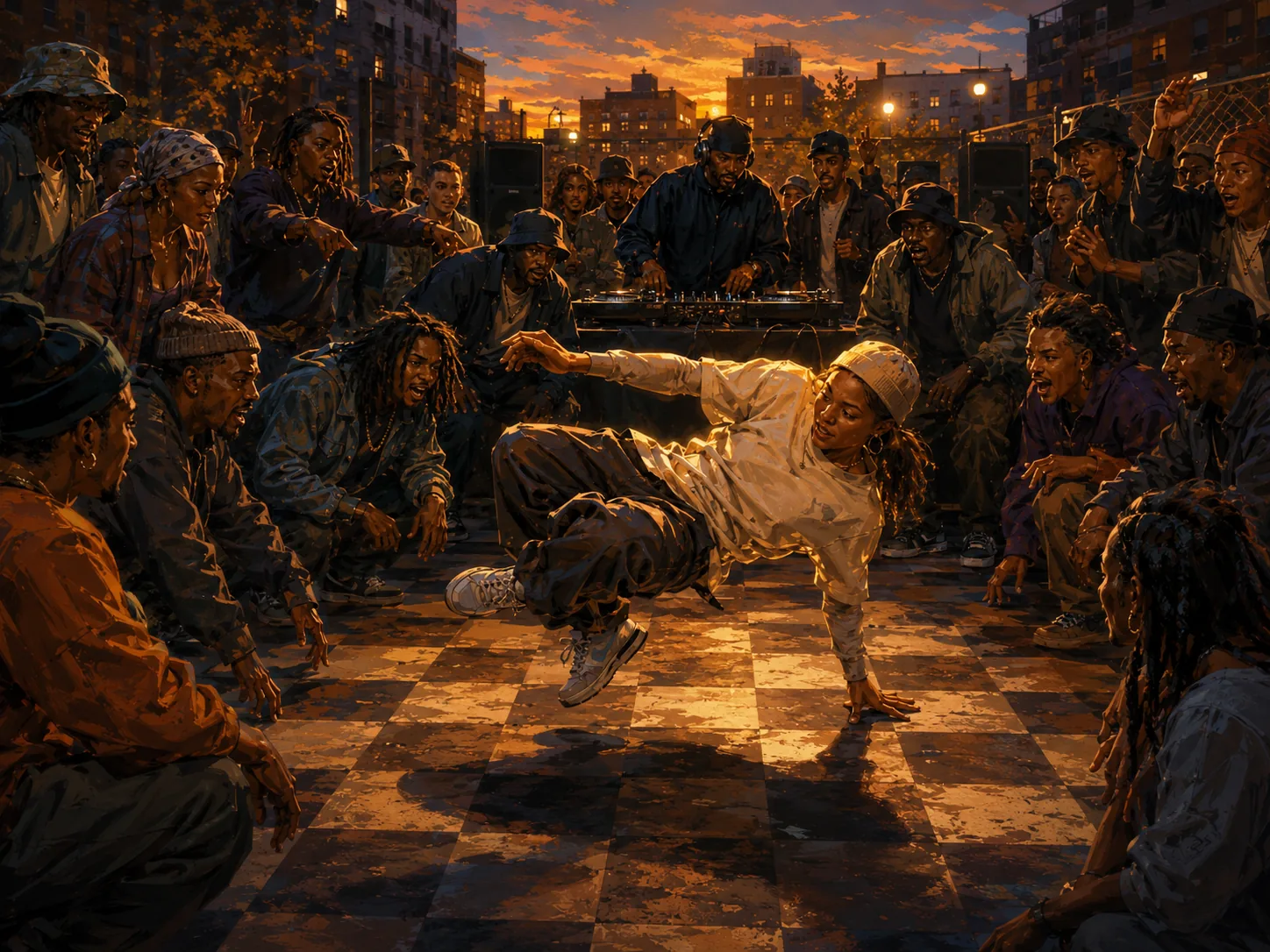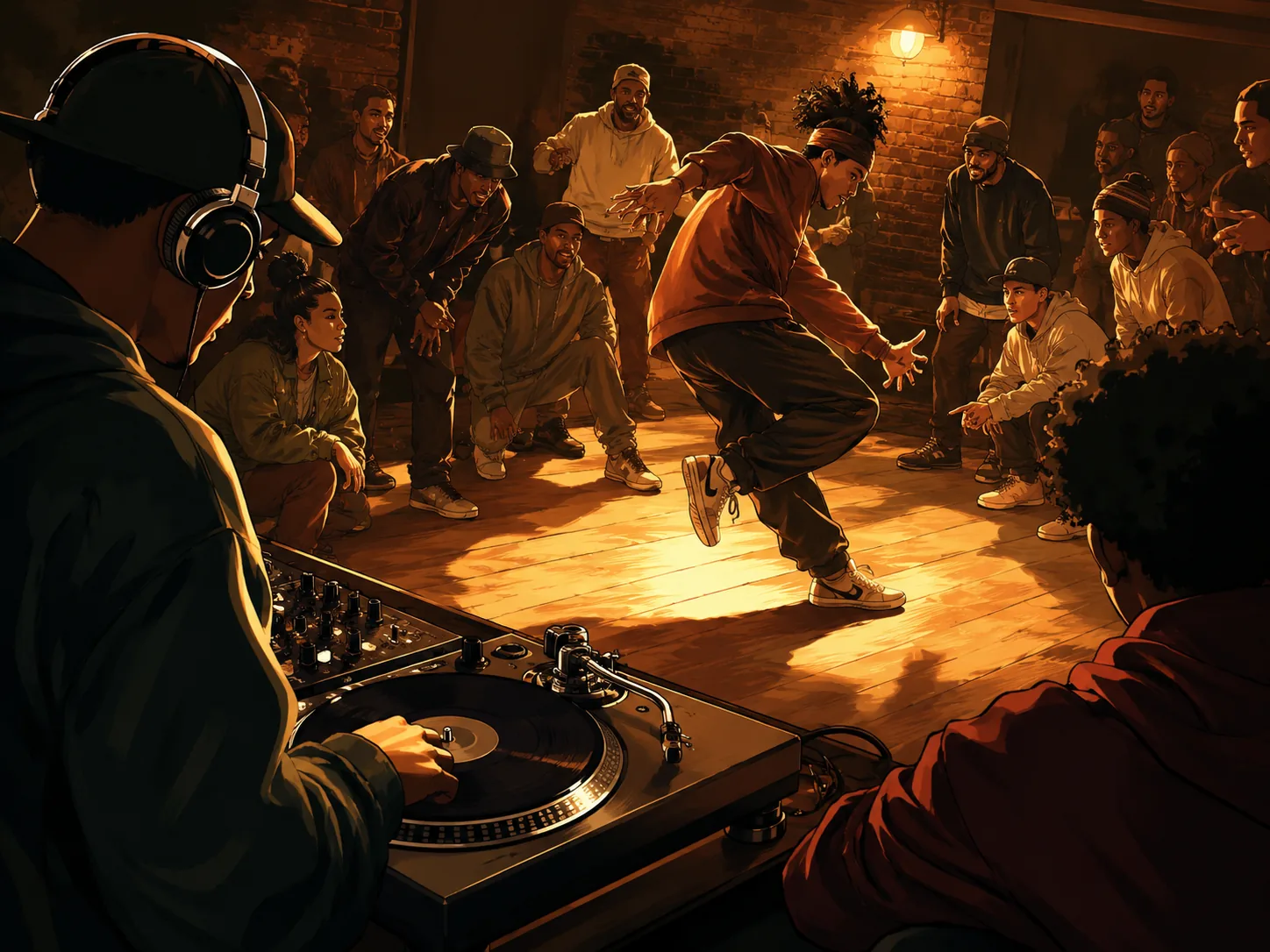
DJ playing a breakbeat while a dancer enters the cypher
What is a breakbeat?

The Breakbeat That Invites the Dancer In

A breakbeat is the rhythmic part of the music that opens space for the dancer. It is the section where the drums, percussion, groove and energy become most alive. In early hip-hop culture, dancers listened for these moments because the breakbeat gave them a clear invitation to step in, respond and build movement.

Breaking begins in that relationship between sound and body. The dancer does not simply move on top of the music, but enters into it. The breakbeat creates a moment of connection: it calls the dancer forward, shapes the timing and gives the round its pulse, character and direction.

Scene noteThe breakbeat is not just a sound. It is the musical invitation into movement.
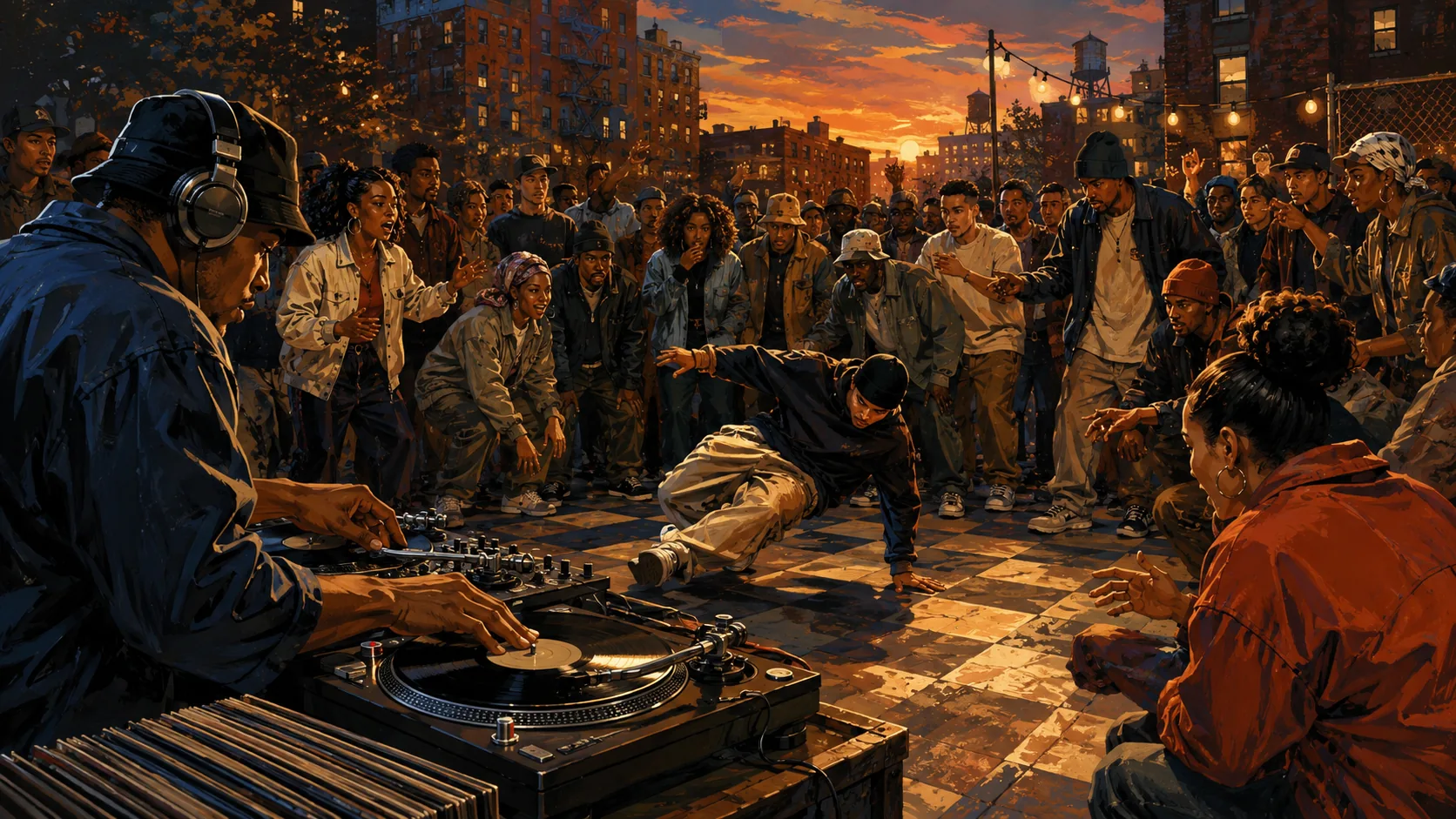
The DJ feeds the floor

DJs played a major role in the growth of breaking. By selecting records with strong drum breaks and extending those breaks, DJs gave dancers more time to enter the floor, build energy and respond.

The DJ was not just playing songs. The DJ was controlling the energy of the room, reading the dancers and creating space for movement. When a break was extended, the cypher could grow.

Scene noteA strong DJ does not only play music. A strong DJ feeds the floor.
Original illustration of DJ extending a breakbeat for dancers
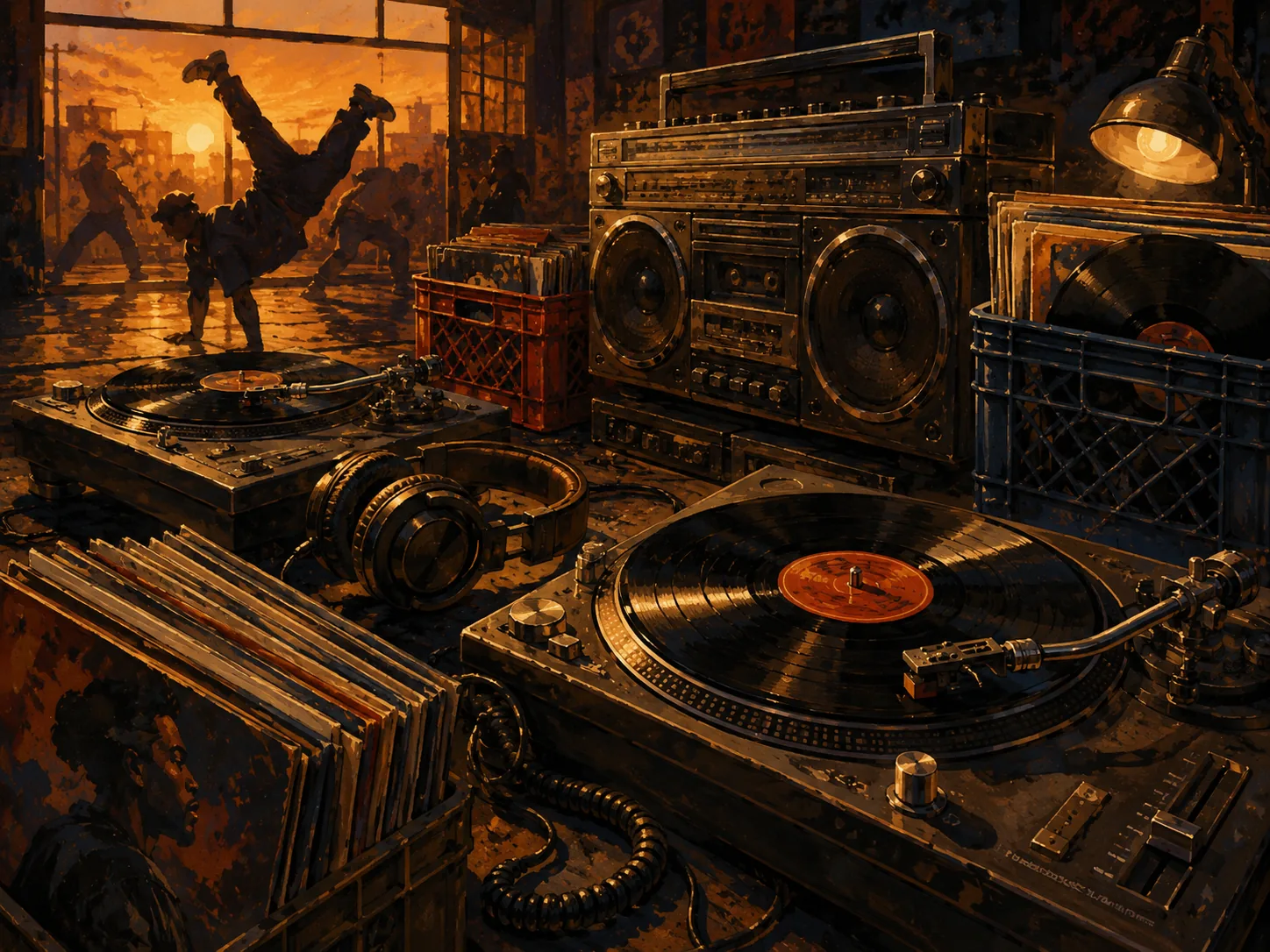
Original illustration of vinyl records, turntables and breakbeat record culture

Drums, groove and raw energy

Breaking music comes from records that carried strong rhythm, drums and groove. Funk, soul, disco, rock and early hip-hop all helped shape the sound of breaking.

heavy drumsclear breaksstrong bass linespercussionrhythm changesopen sectionsenergy shiftsgroove

A good breakbeat gives dancers something to catch, ride, hit or answer.

More than being on beat

Musicality is how a dancer connects movement to music. It is not only about being “on beat.” It is about hearing the drums, accents, pauses, rhythm changes, bass lines and energy shifts.

A dancer with musicality knows when to move and when not to move. They can hit a freeze on an accent, change footwork with the rhythm, pause with the music or use power when the energy rises.

Scene noteThe music is not background. The music is part of the round.
Original illustration of a breaker catching a musical accent

How dancers use music

A strong breaker does not just perform moves while music plays. A strong breaker uses the music to shape the round.

Toprock

Standing movement that lets the dancer enter the rhythm and show style.

Go-downs / entries

Transitions that can drop with the beat or follow a musical change.

Footwork

Floor movement that can ride drums, switch direction or change speed with rhythm.

Freezes

Stops that can hit accents, pauses or strong moments in the song.

Power moves

Rotational movement that can build energy when the music opens up.

Gestures

Small actions that can answer lyrics, accents, mistakes or battle moments.

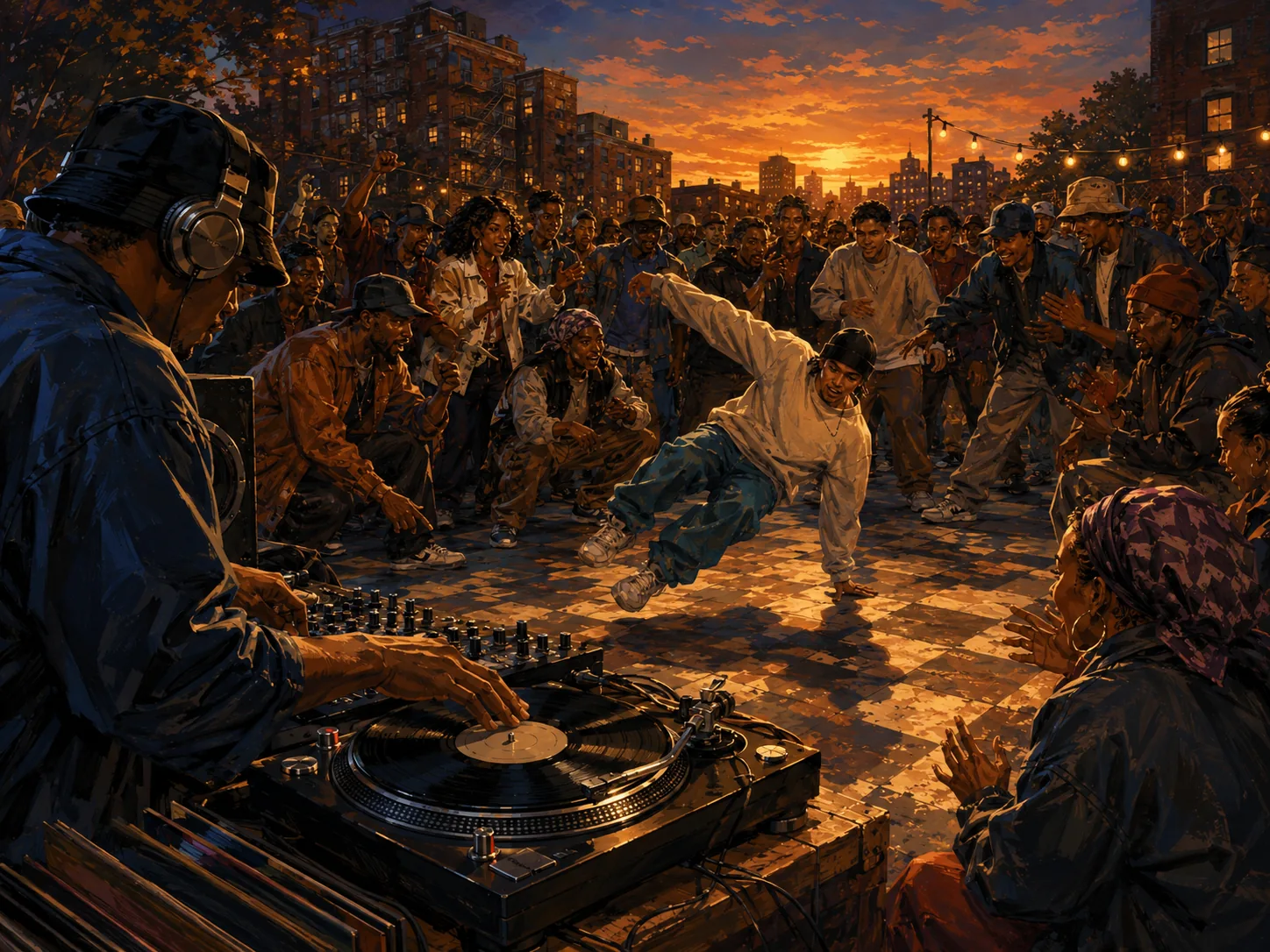
Original illustration of DJ and cypher energy in breaking

A shared rhythm

In a cypher, the DJ, music, dancers and crowd all affect each other. The DJ can raise the energy with a break, the dancers can respond with movement, and the crowd can push the moment even further.

DJ plays the breakdancer enterscrowd reactsdancer respondsDJ keeps the energy moving

Drum-heavy, funky, energetic and open

You do not need to list specific songs to understand the feeling of breaking music. The sound is often built around drums, breaks, funk grooves, percussion, bass and raw rhythmic energy.

drum-heavyfunkyenergeticrawrhythmicopensharpexplosivecypher-ready

Listen first, then move

Beginners should practice with music from the beginning. Practicing without music can help learn movement mechanics, but breaking needs rhythm to make sense.

1. Listen first2. Find the beat3. Bounce with the rhythm4. Add basic toprock5. Practice footwork slowly6. Hit a freeze on a strong sound7. Build a short round
Practice ideaMove for four counts, pause for two counts, then move again. This teaches control and timing.
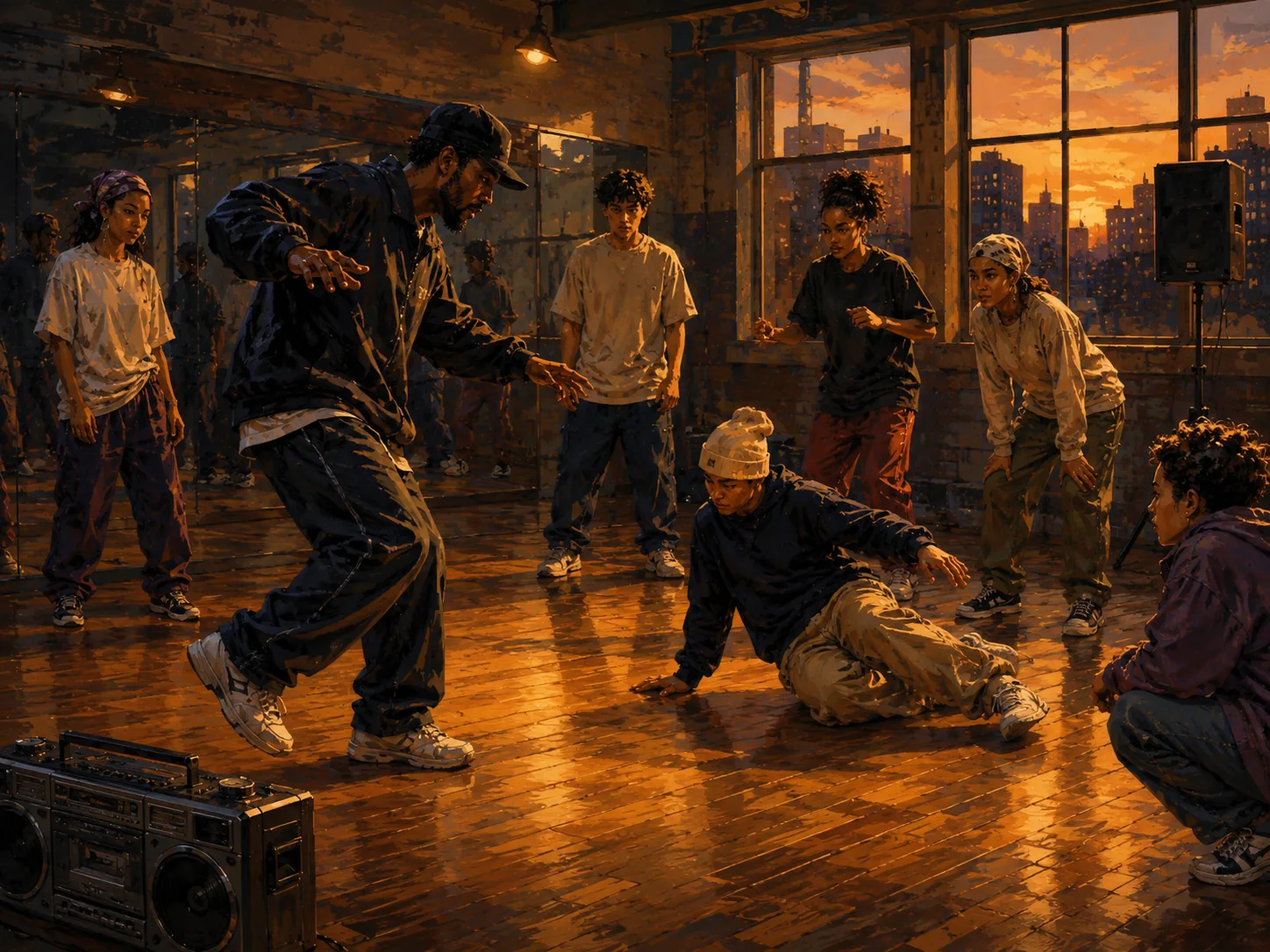
Original illustration of beginner practicing rhythm with music

Without music, breaking becomes only movement

Music gives breaking its structure, feeling and energy. The break tells the dancer when to enter. The drums give the body direction. The rhythm shapes the floorwork. The accents give freezes power. The DJ gives the cypher energy.

Breaking does not begin with the move. It begins with the break.

Breaking Music FAQ

Common questions about breaking music, breakbeats, DJs and musicality.

What music is used for breaking?

Breaking often uses breakbeats, funk, soul, disco, rock and hip-hop records with strong drums, rhythm and groove.

What is a breakbeat?

A breakbeat is a rhythmic section of a song, often focused on drums or percussion, that dancers can respond to.

Why is music important in breaking?

Music gives breaking timing, energy, rhythm and structure. Dancers use music to shape their rounds.

What is musicality in breaking?

Musicality is how a dancer connects movement to the beat, drums, accents, pauses and energy changes in the music.

Can beginners practice breaking without music?

Beginners can practice movement mechanics without music, but they should also practice with music early so they develop rhythm and timing.

What does it mean to hit the beat?

Hitting the beat means placing a move, freeze, gesture or change exactly on a musical accent or rhythm point.

Why are DJs important in breaking?

DJs select and control the music, extend energy, read the floor and help create the environment where dancers move.

Is breaking only about fast music?

No. Breaking can use different tempos and energies. What matters is rhythm, groove, breaks and how the dancer responds.