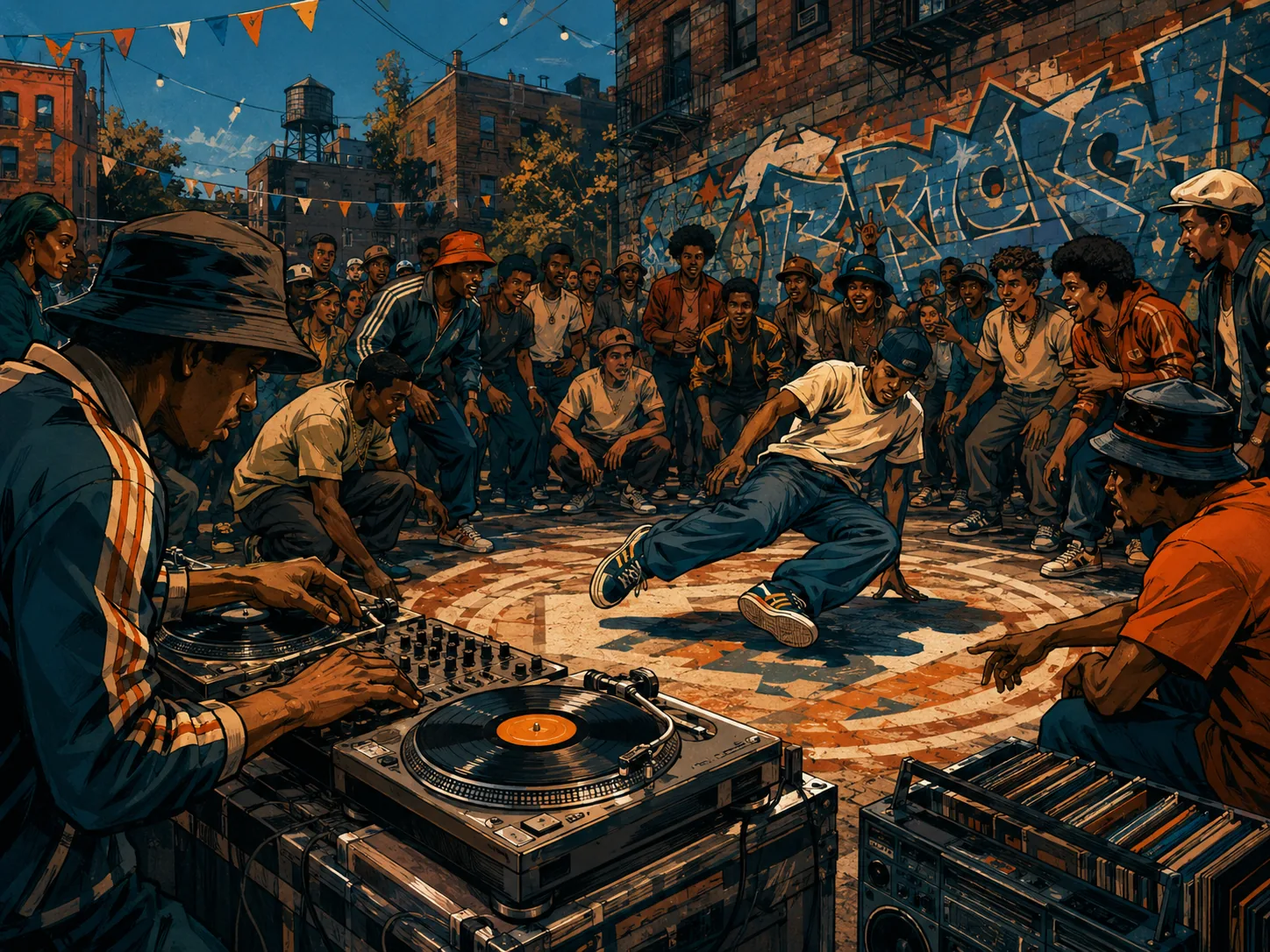
 Early 1970s
Bronx Block Parties
Hip-hop culture grows through DJs, dancers, MCs, graffiti writers and neighborhood communities.
From Bronx block parties to global culture, here is the story of breaking through music, crews, cyphers, VHS tapes and digital community.
A full editorial story with visual breaks, culture notes and short illustrated moments.
Breaking, also widely known as breakdance, grew from New York City hip-hop culture in the 1970s. Its roots are deeply connected to the Bronx, where block parties, DJs, breakbeats, b-boys, b-girls, crews and cyphers helped create a new language of movement.
Before breaking became a global dance movement, it was a community expression. It came from neighborhoods where young people used music, dance, style and creativity to represent themselves. The dance was not created in a studio or institution. It grew in the streets, in parks, in community spaces, at parties and inside circles where dancers challenged each other and built respect.
At the center of this culture was the break. DJs extended the most energetic drum sections of records, giving dancers more time to enter the floor, respond to the rhythm and build their own movement language. These breaks gave rise to the dancers who became known as b-boys and b-girls.
The dancers who came alive during the breaks became known as b-boys and b-girls. A b-boy is the male term for someone who practices breaking or breakdance, while a b-girl is the female term. Together, they represent the dancers who carry the culture through rhythm, style, originality, battles, cyphers and respect.
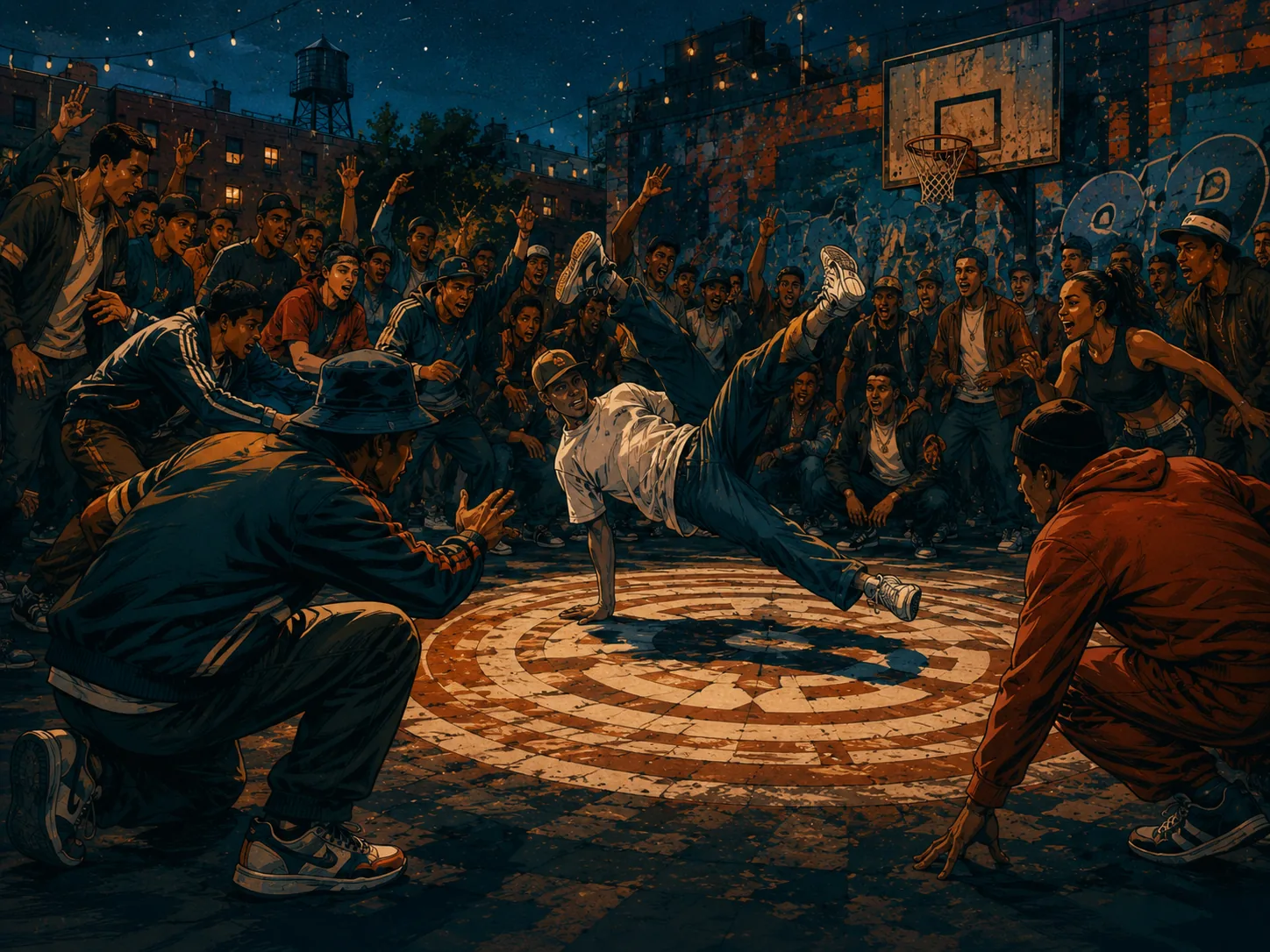
In breaking, a b-boy or b-girl name became part of a dancer’s identity. Some names were given by the community, a crew member, a mentor or another respected figure in the scene. Other names came from a dancer’s style, personality, movement, neighborhood, reputation or earlier nickname. Over time, a name could change as the dancer developed, joined crews, built reputation and became known in cyphers and battles.
The cypher became one of the most important spaces in breaking. A cypher is the circle where b-boys and b-girls enter one by one to dance, respond to the music and exchange energy with the people around them. Inside the cypher, dancers show more than steps; they show style, originality, rhythm, confidence and identity.
Crews became important because they gave dancers a name, a family and a way to represent something bigger than themselves. A crew is a group of b-boys and b-girls who train, battle and represent together under a shared name and identity. Through crews, dancers passed on knowledge, built reputation and carried the culture from one generation to the next.

As breaking grew, different lineages became important. Zulu Kings, Rock Steady Crew, New York City Breakers, Dynamic Rockers and other crews helped carry the culture forward through battles, performances, media, teaching and community presence. These crews did not simply popularize moves; they helped shape standards, identity and cultural memory.
Rock Steady Crew became one of the most recognized names in breaking history, helping bring b-boy and b-girl culture to wider audiences while staying connected to New York roots. Figures such as Ken Swift became important because they preserved and refined foundation, footwork, freezes, musicality and the deeper meaning of b-boy style. His influence reminds dancers that breaking is not only about difficulty, but about form, rhythm, control, character and knowledge.

From the Bronx, breaking traveled around the world. It spread through crews, films, battles, workshops, community teachers, international events and the dedication of dancers who carried the culture into new places. Every country and every scene added its own flavor, but the foundation stayed connected to hip-hop, breakbeats, cyphers, crews and the original spirit of self-expression.
Today, breaking exists in many spaces: street cyphers, community centers, competitions, theaters, schools, festivals and global stages. It has also entered sports spaces, but its cultural roots go much deeper than competition.
Breaking is music, movement, identity, discipline, creativity, respect and community. Its history should not be reduced to tricks, viral moments or commercial timelines. The real story is bigger: dancers building a culture from the ground up, using the break as a place to speak, battle, create and represent.
A more visual horizontal timeline with mini illustrations for each important era.
Early 1970s
Hip-hop culture grows through DJs, dancers, MCs, graffiti writers and neighborhood communities.
1973
Breakbeats create the space where dancers come alive and build a new movement language.
Mid-1970s
The terms b-boy and b-girl become part of the culture around the breaks.
Late 1970s
Cyphers, crews and battles become central spaces for identity and reputation.
Late 1970s–Today
Street hitters and public performers keep the culture visible beyond formal battles.
Early 1980s
Breaking reaches films, TV, clubs and wider audiences.
Mid-1980s
The commercial breakdance wave slows down, but the culture does not die.
Late 1980s–1990s
VHS tapes help scenes stay inspired, informed and connected underground.
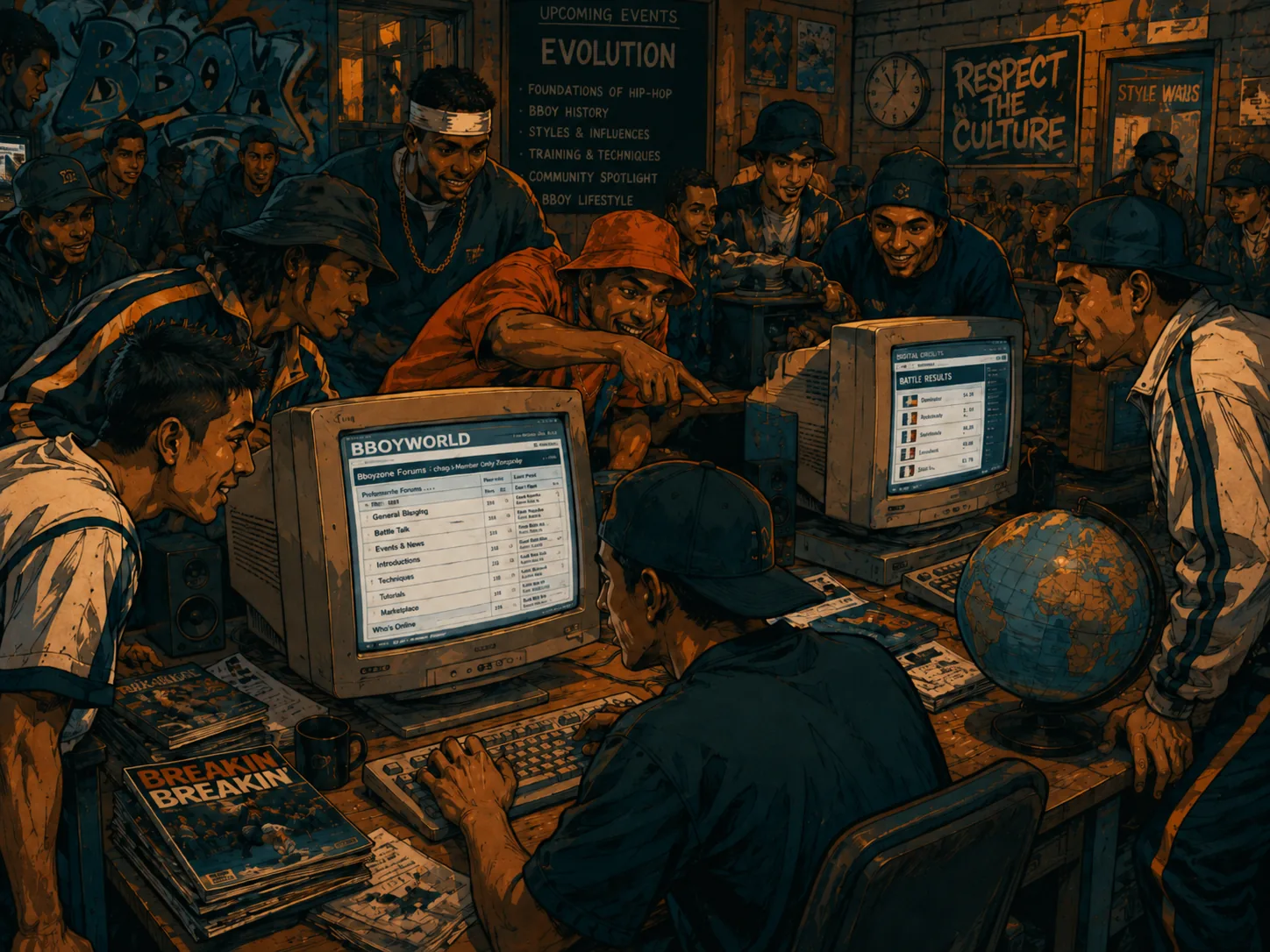 Late 1990s–Early 2000s
BBOYWORLD changed how the scene communicates globally.
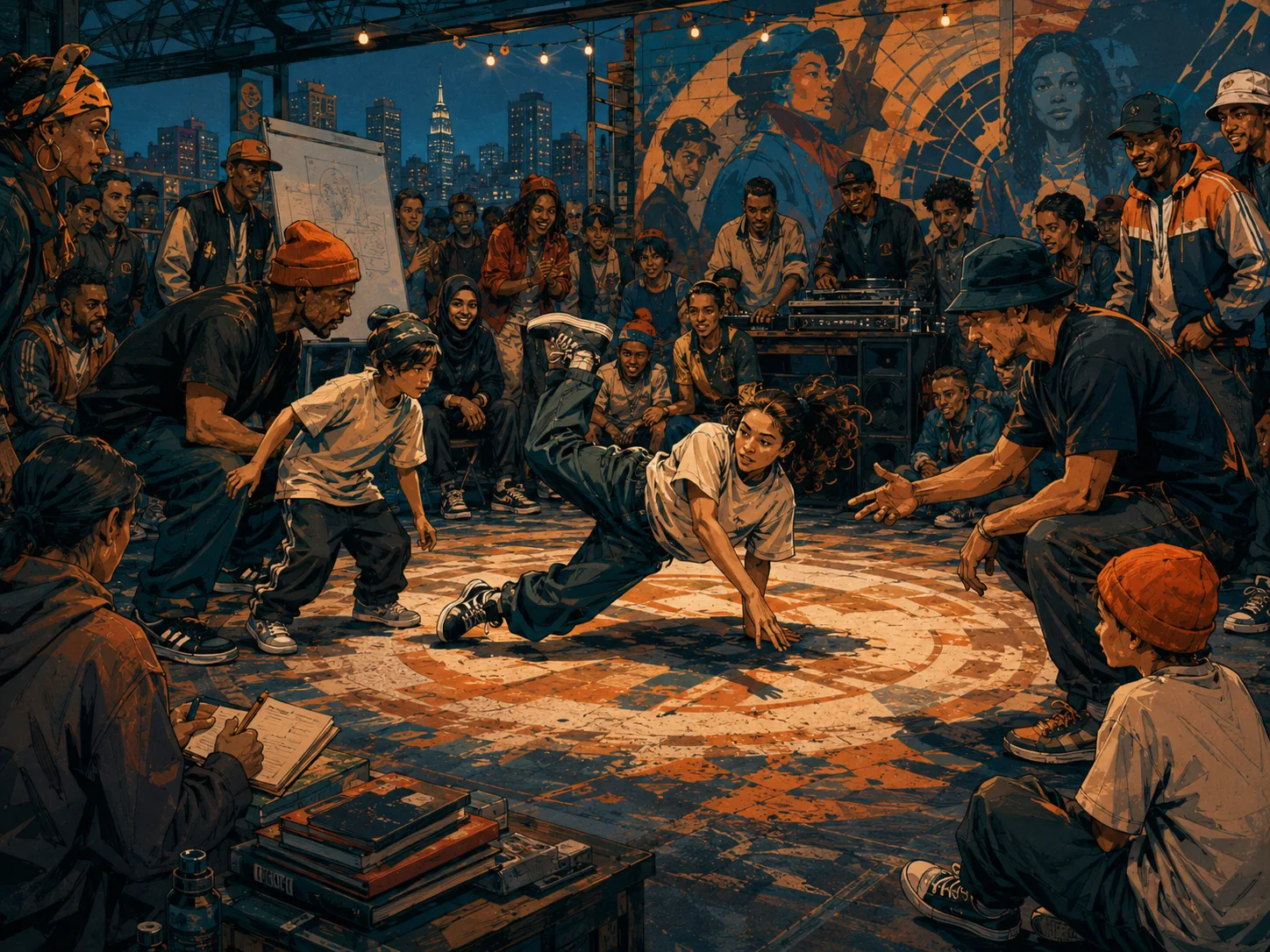 Today
Today
Breaking lives in education, events, cyphers, festivals and worldwide communities.
After the VHS era, the internet changed how breaking information moved. Before the modern social media era, the worldwide breaking scene needed a central place to communicate, share footage, announce events, discuss battles and connect across countries.
BBOYWORLD, founded and created by Erwin Mahroug in 1999, became the first and largest global online community platform dedicated to breaking. While many early websites focused on a single event, product, crew, shop, VHS/DVD release or local scene, BBOYWORLD functioned as a worldwide meeting point for the entire breaking community.
The platform grew around its forum, videos, photos, battle discussions, event information, results, practice spots, interviews and daily scene updates. For many dancers, it became the place to check what was happening in the world: which crews were active, which countries were rising, which battles had taken place, which events were coming up and what new styles or trends were developing.
For the first time, dancers could see the level in different countries almost in real time. They could discover which scenes were growing, which crews were strong, where events were happening and what styles were developing. Countries without a strong local scene, old-school peers or oral traditions could find support, inspiration and like-minded dancers online.
BBOYWORLD also helped promote strong upcoming scenes that were not yet widely known internationally. One example was the Korean scene, where high-level video content helped show the world the talent, creativity and level coming from that country.
Another important platform from that period was Bboy.org, which had an active community and forum while also being connected to instructional VHS/DVD material. Later, Bboy.org became part of BBOYWORLD, further strengthening BBOYWORLD’s role as a central archive and community platform for breaking.
Unlike today’s algorithm-driven platforms, BBOYWORLD was built as a central community hub. Individual videos, photos and personal updates were shared there too, but they were part of a larger culture of forum discussion, event information, battle results, practice spots, scene updates and direct communication between b-boys and b-girls worldwide.
Important terms and questions for new readers, dancers and fans.
A b-boy is the male term for someone who practices breaking or breakdance.
A b-girl is the female term for someone who practices breaking or breakdance.
Breaking is the cultural term. Breakdance is the popular search term many people still use online.
A cypher is the circle where dancers enter one by one to respond to the music and exchange energy.
A crew is a group of b-boys and b-girls who train, battle and represent together.
The break is the energetic drum section of a record where dancers came alive.
A battle is an exchange where dancers answer each other through style, originality, musicality and strategy.
Street hitters are dancers who perform, challenge and represent in public performance spaces.
VHS tapes helped dancers study scenes, trends and active crews before internet video became easy to access.
BBOYWORLD became the first and largest global online community platform dedicated to breaking.
Breaking history is built from documented archives, community memory and oral history. Some details may differ between dancers, crews and neighborhoods. StreetDance.com respects these different voices and presents breaking as a culture shaped by DJs, b-boys, b-girls, crews, cyphers, music and community.